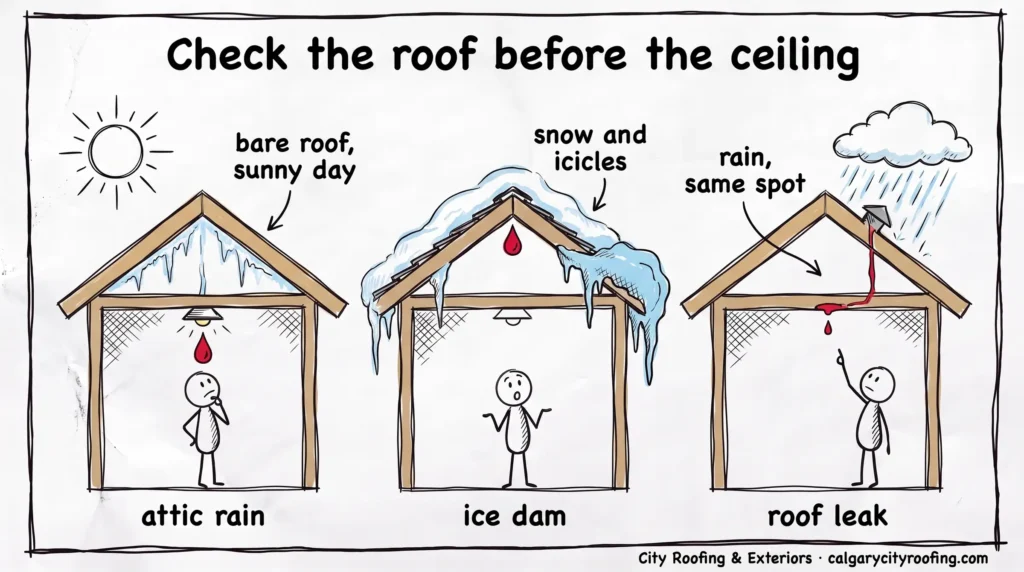
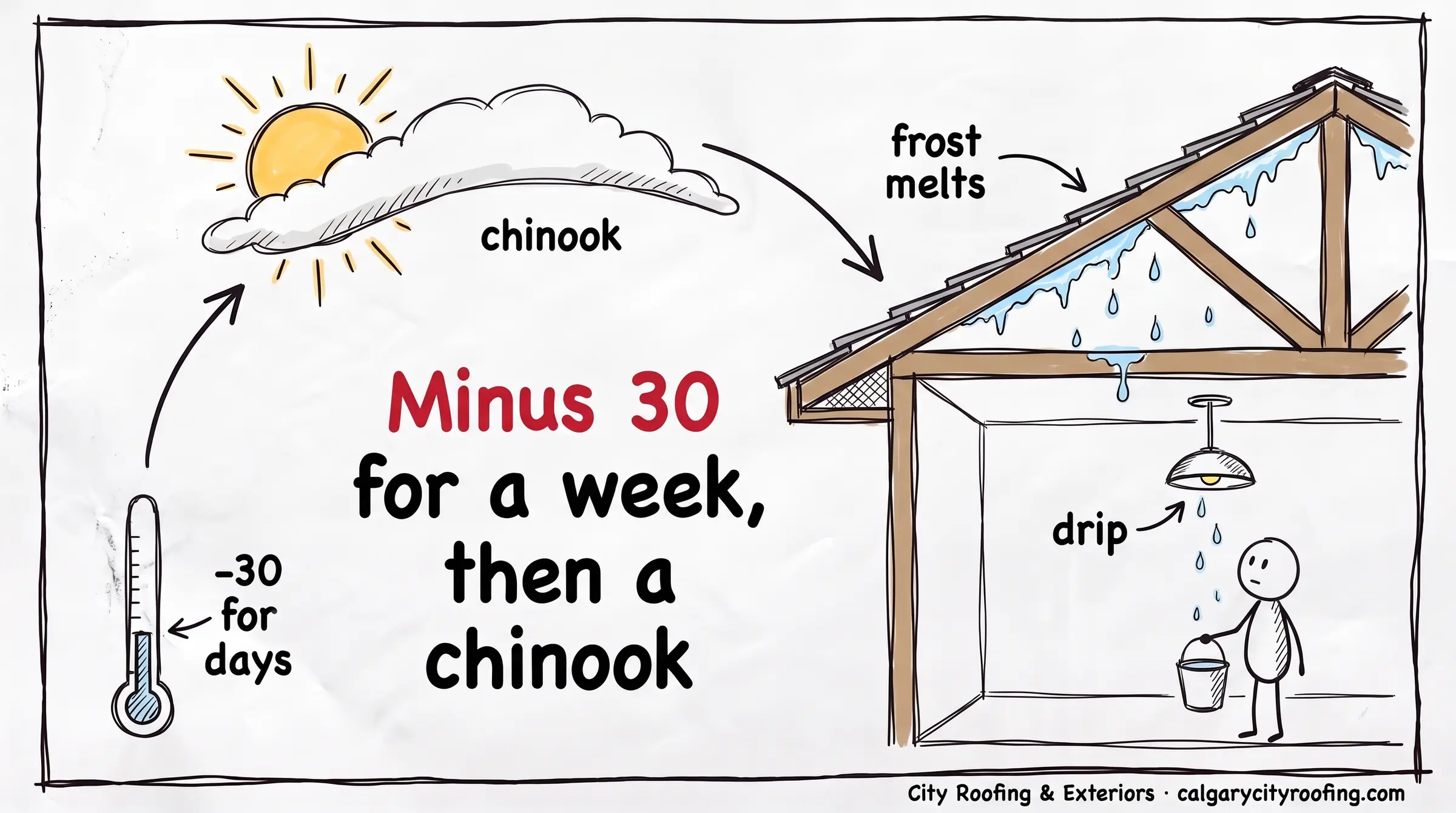
Attic rain is frost that builds up on the underside of your roof during a long cold snap, then melts all at once when a chinook blows in and drips through the ceiling. It looks exactly like a roof leak, but the water comes from inside the house, not through the roof.
That difference matters, because a new roof won’t fix it. Here’s how to tell which one you have.
What is attic rain, and why does Calgary get so much of it?
Warm, damp air from the house leaks into the attic and freezes onto the cold roof deck as frost. The longer the cold lasts, the thicker the frost gets.
Calgary adds the trigger most cities don’t have. The City of Calgary counts an average of 46 chinook days a year, and a chinook can take the attic from minus 30 to above freezing in an afternoon. All that frost melts at once.
The worst winters follow long, unbroken cold. In February 2019, Global News reported one Calgary roofer taking more than 150 attic rain calls in a single week.
Is it attic rain, an ice dam or a roof leak?
Look outside before you look at the ceiling. The roof and the weather in the days before usually give it away.
| Attic rain | Ice dam | Roof leak | |
|---|---|---|---|
| Weather before | A week or more of hard cold, then a chinook | Snow on the roof, then a thaw | Rain, or snow melting off the roof |
| Roof outside | Can be bare and dry, even on a sunny day | Snow on top, an ice ridge and icicles at the eave | Missing shingles, damaged flashing, or nothing you can see |
| Where it drips | Several spots, mid-ceiling, at lights and fans | Near the outside walls, top of the wall | The same spot, every time it rains |
| Comes back? | Only after the next long cold snap | Every thaw while snow sits on the roof | Every rain |
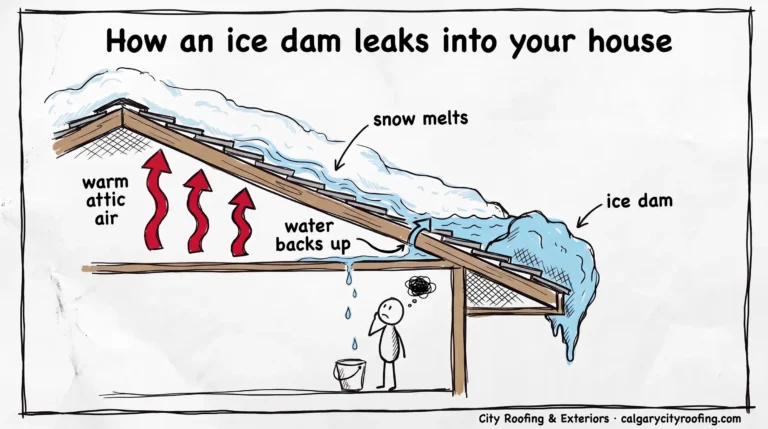
If the middle column sounds like your house, our post on why ice dams keep forming on Calgary roofs covers that one.
Why is my ceiling dripping when it isn’t raining?
Because the water was already in your attic, frozen. When it melts, it runs along the underside of the roof deck and drops wherever it finds a gap: pot lights, the attic hatch, bathroom fans and the joints in the drywall.
That’s why attic rain shows up as scattered spots rather than one stain. One Calgary homeowner told CBC News he had about seven spots the size of a baseball in each room, all in the middle of the ceiling. A roof leak almost never looks like that.
Why is my bathroom fan dripping water in winter?
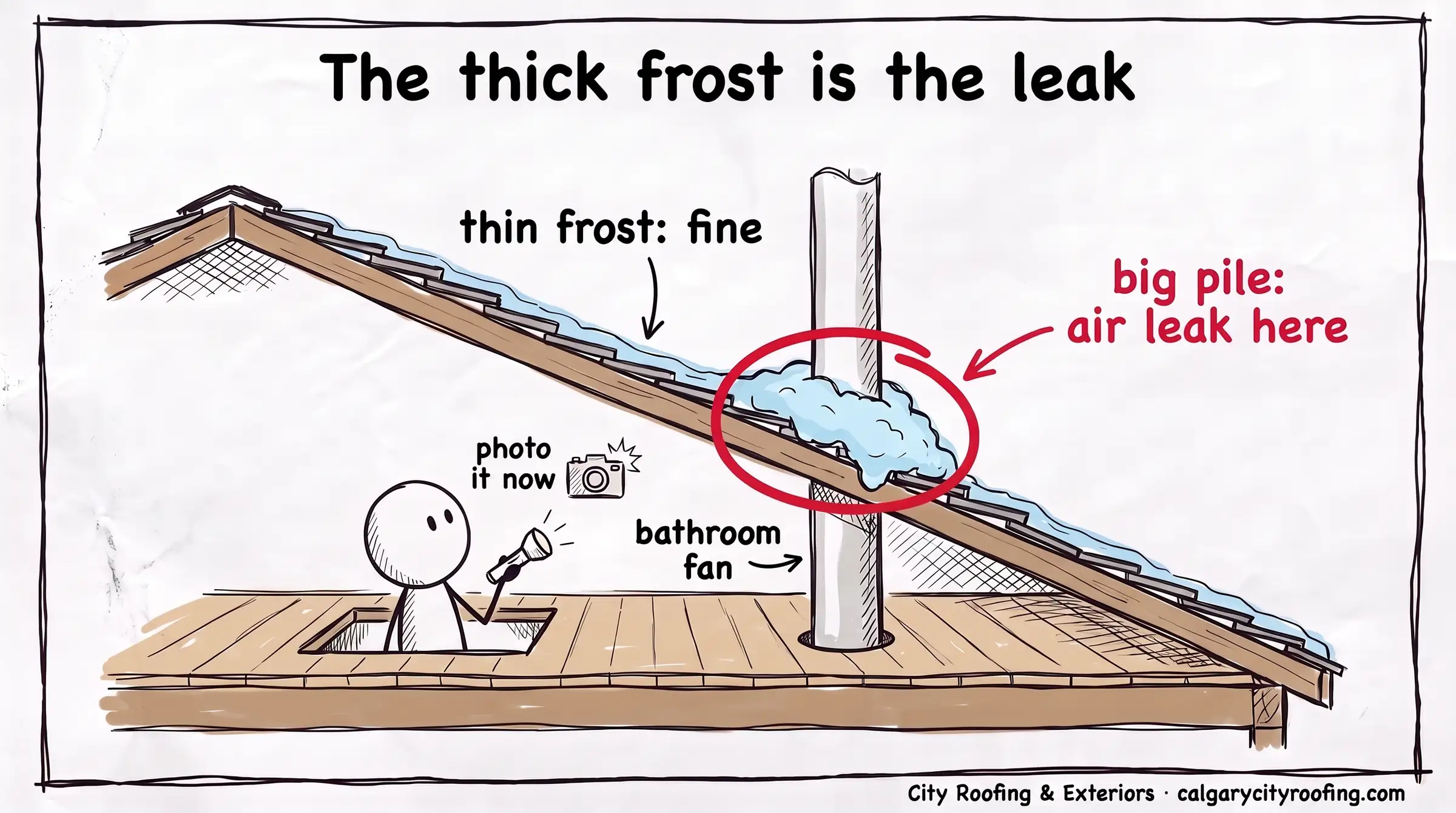
Usually because the fan is pushing warm, wet air into the attic instead of outside. The duct may have come loose, it may not be insulated, or it may end right next to a soffit vent so the steam gets pulled straight back in.
All that moisture freezes around the duct in a cold snap and pours back down the fan when it thaws. A dripping fan after a chinook is one of the clearest signs of attic rain.
How do you check your attic for frost before a chinook?
Look during the cold snap, before the warm-up. Pop the hatch, stay on the ladder, and shine a flashlight across the underside of the roof.
A thin, even layer of frost is normal. Darrell Paul, a building envelope specialist, told CBC Calgary that frost under a quarter of an inch is probably not a problem, but a build-up several inches thick in one spot shows exactly where warm air is leaking in. Take photos from the hatch. Don’t walk on the joists, because a foot through the ceiling is a bigger problem than the frost.
What should you do when the ceiling starts dripping?
Catch the water first. Put buckets and towels down, turn the humidifier off, and run the bathroom and kitchen fans that vent outside.
Keep the attic hatch closed while it’s dripping, so you don’t pull more warm air into the attic. Photograph and date every stain, because you’ll want them if you call your insurer or your builder. Once the frost has melted out, it’s the right time to find the cause.
Why do newer homes, flat roofs and top-floor condos get it worst?
Newer homes are built tighter, so moisture from showers, cooking and people has fewer places to go. The CBC expert noted newer homes are more susceptible, and owners of homes only a few years old should call their builder or warranty provider first.
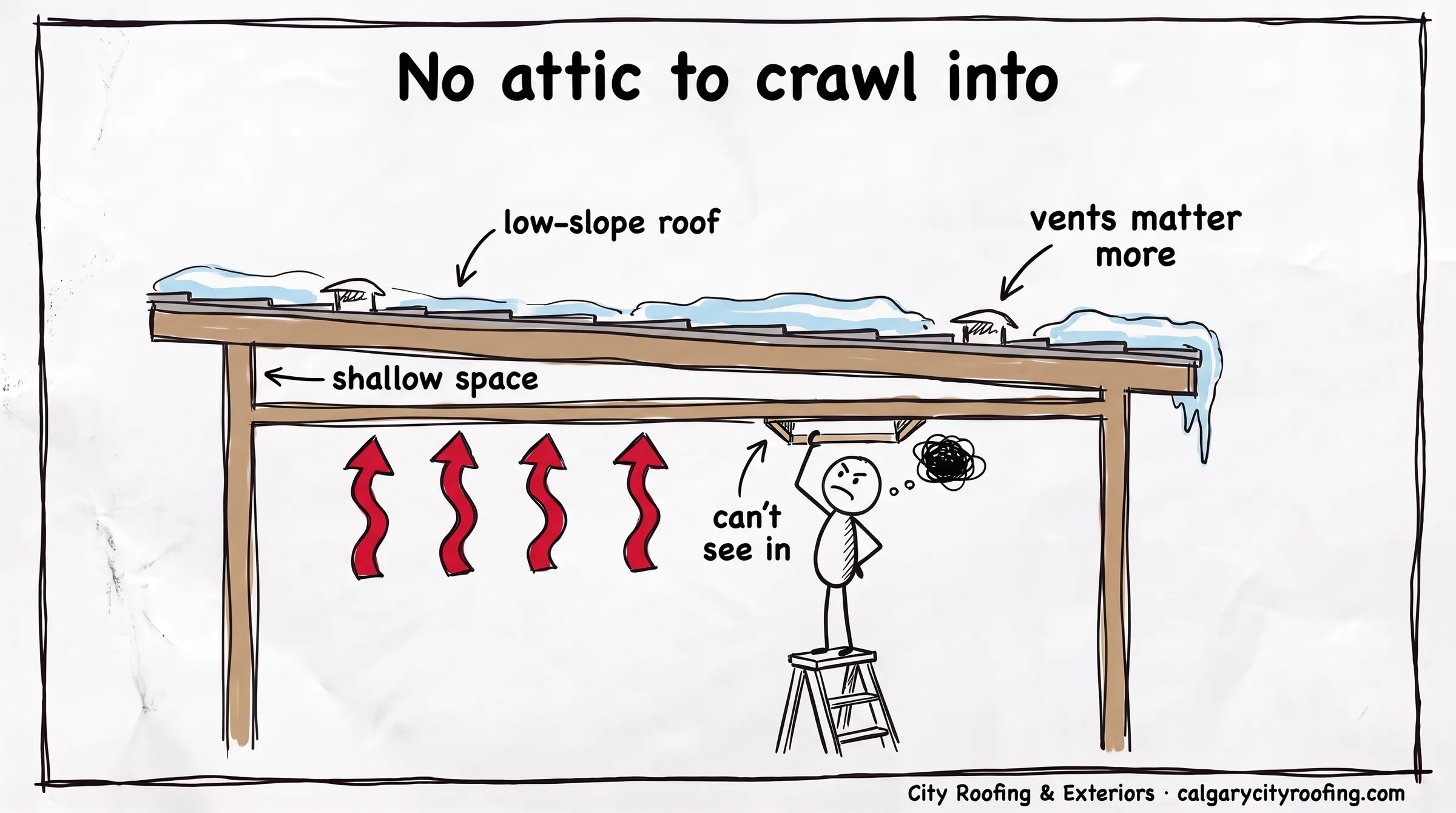
Low-slope roofs, shallow attics and top-floor condo or townhouse units are harder still, because often nobody can see inside. From the room below, attic rain and a leaking membrane look identical. These roofs need more ventilation than a standard attic, and the vents are set when the roof is built or replaced. That’s when it pays to have a roofer check them, from the roof side.
Will a new roof fix attic rain?
Usually not. Attic rain starts with warm air leaking up from the house, and new shingles don’t change that.
One homeowner in a cold climate shared online that they paid about $9,000 for a new roof and insulation, and the frost-melt came back worse the next winter. If your roof is sound, the fix is sealing the air leaks and checking the attic venting. A roofer should rule out a real leak first, check the roof vents and look for wet or damaged sheathing, then tell you plainly if the roof isn’t the problem.
Common questions
Does home insurance cover attic rain in Alberta?
Often not. Insurers usually cover sudden water damage but treat damage that builds up over time as maintenance, so call your insurer with your dated photos and ask. On a home under five years old, check the Alberta new home warranty too.
Should I open the attic hatch while the ceiling is dripping?
No. Opening it lets more warm, damp air into the attic and can make it worse. Check for frost during the cold snap instead, before the chinook arrives.
Who do I call for attic rain, a roofer or an insulation company?
Start with a roofer to rule out a real roof leak and check the roof vents. If the roof is sound, sealing air leaks and adding insulation are separate jobs, often done by insulation contractors.
Is some frost in the attic normal?
Yes. A thin, even layer during a deep cold snap is normal. Thick piles in one spot, or frost on every surface, point to warm air leaking in.
Not sure whether it’s the roof? We’ll look, take photos and tell you in plain words before anyone quotes a repair. See our roof repair page, or call 403-608-9933.