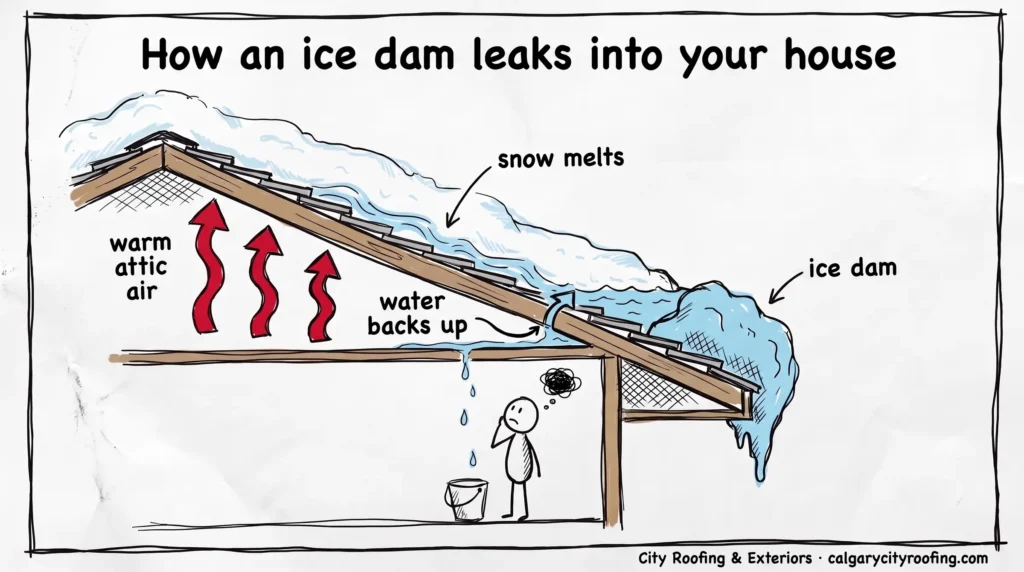
An ice dam is a ridge of ice that builds along the bottom edge of a roof. Melting snow runs down, hits the cold eave, freezes, and the water behind it backs up under the shingles and into the house.
Calgary makes more of them than most cities. The City of Calgary’s climate review counts an average of 128 freeze-thaw cycles and 46 chinook days a year. Every warm spell melts roof snow, and every cold night refreezes it at the edge.
What causes ice dams on a roof?
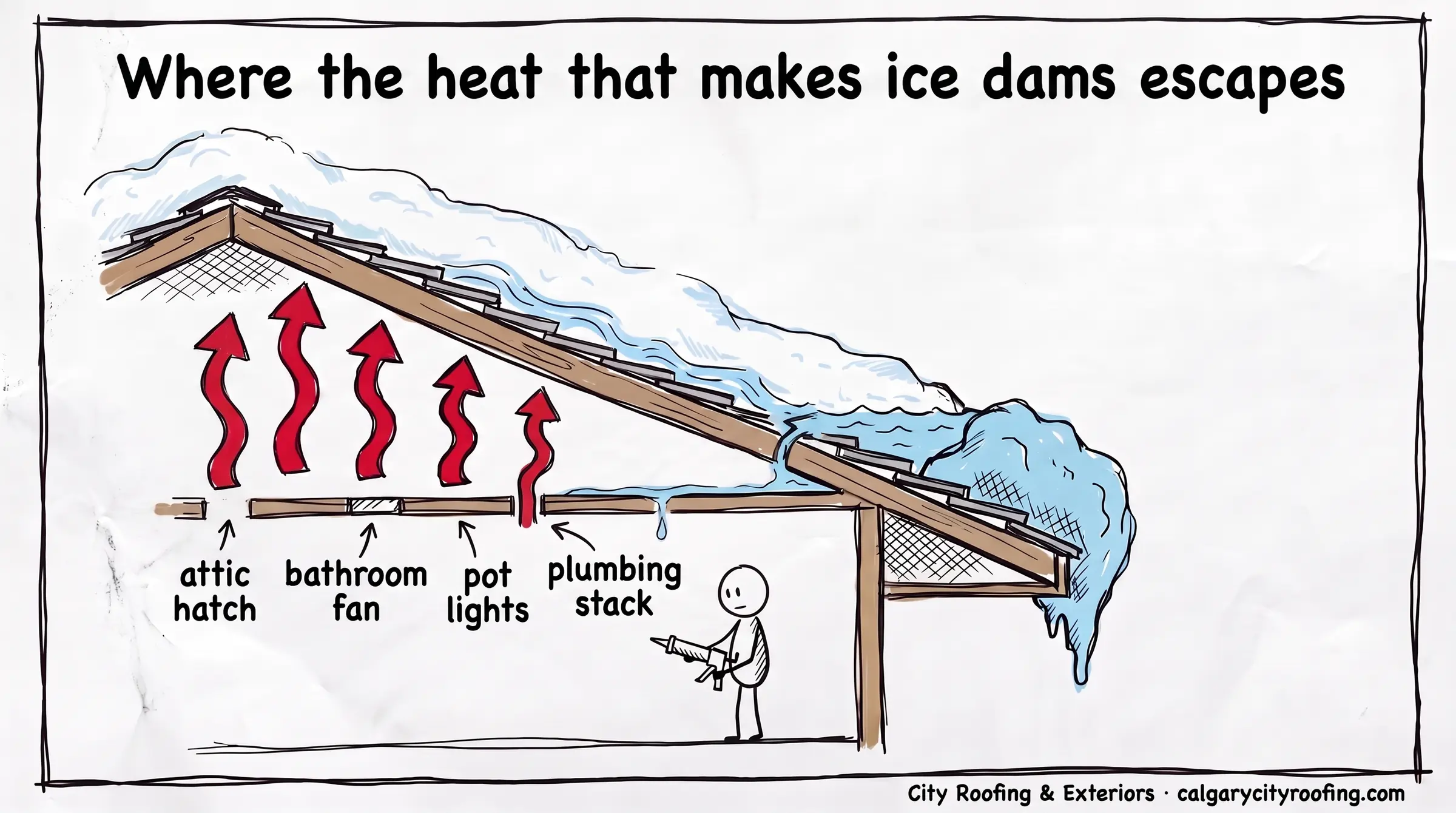
Heat escaping from the house into the attic. It warms the roof deck, melts the snow from underneath, and the meltwater runs down to the overhang, which sits outside the heated house and stays below freezing.
The usual leaks of warm air are the attic hatch, bathroom fans that vent into the attic instead of outside, pot lights, plumbing stacks and gaps around the chimney. Thin insulation and blocked soffit vents make it worse. A dam often sits right above one of those spots.
Chinooks add a twist. A warm day can melt snow even on a well-insulated roof, then the overnight cold freezes it at the eave. That’s why Calgary gets dams in December and January, not only in a spring melt.
Can ice dams cause roof leaks, even on a newer roof?
Yes. Shingles shed water running downhill, but they aren’t watertight against water sitting on them. When a dam holds a pool of meltwater, it seeps up under the shingle edges and into the deck.
What stops it is the waterproof membrane under the shingles at the eaves, often called ice and water shield. Building codes require eave protection in cold climates, but how far up the roof it runs varies by roofer. It’s why the same ice dam can leak into one house and not the one next door.
Ice dams are also a common cause of the ceiling stains people mistake for a bad roof. Our roof repair page covers winter leaks.
When should you worry about ice dams and icicles?
A few icicles are normal. Worry when you see:
- A thick row of icicles along the whole eave
- Ice building on the soffit or forcing its way behind the eavestrough
- Water stains or peeling paint at the top of an outside wall
- Damp spots on the ceiling near an outside wall
Those mean water is getting past the edge of the roof. The longer it sits, the more it soaks into the deck, insulation and drywall.
Can you remove an ice dam yourself?
You can clear snow, but don’t chip the ice. Hacking at an ice dam with a shovel or hammer tears shingles and cuts membrane, which turns a slow leak into a fast one. Don’t climb onto a roof in winter either.
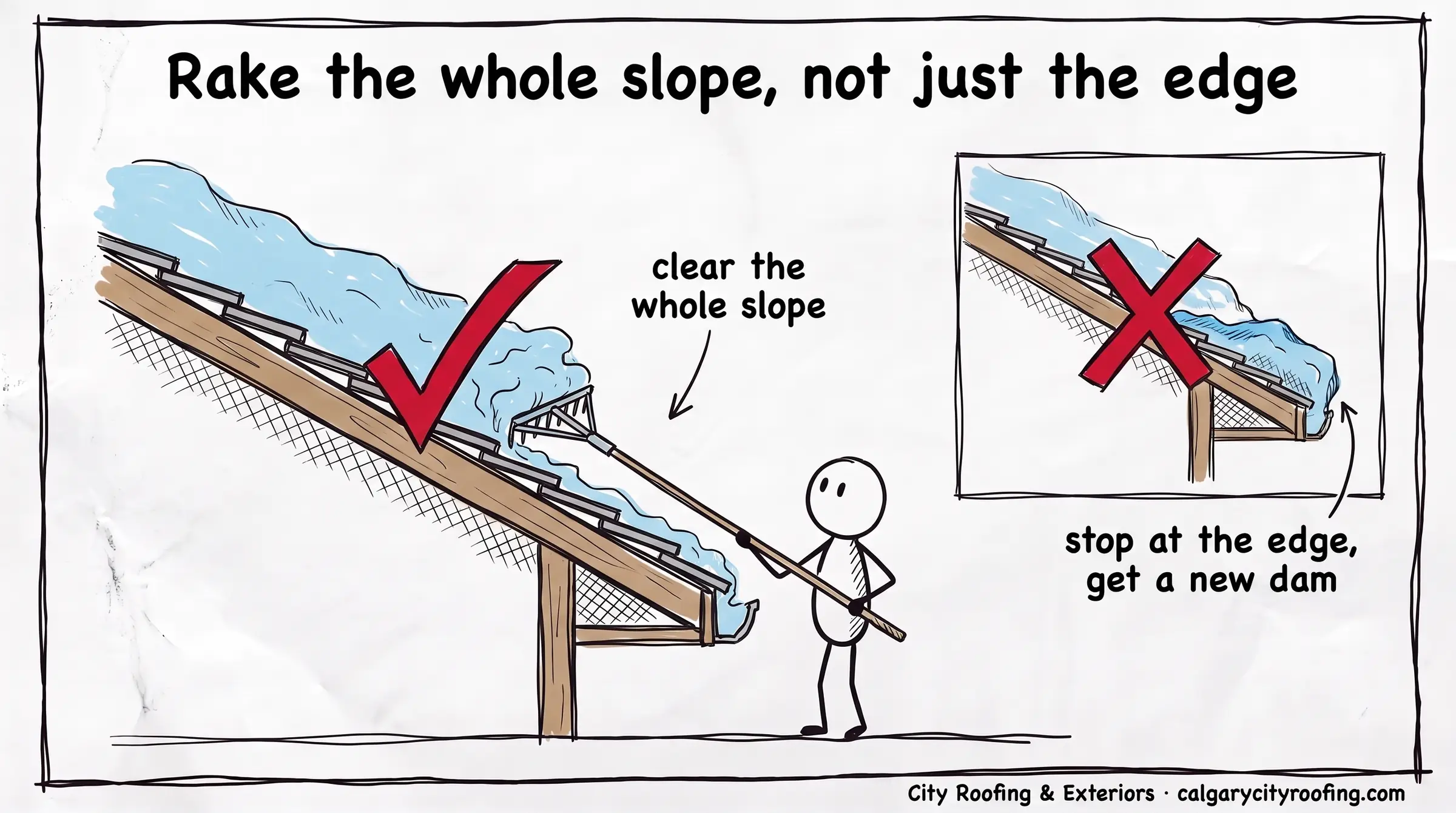
A roof rake from the ground is the safest tool. Clear the whole slope you can reach, not just the bottom few feet. One homeowner online raked only the first three feet after a big snowfall and got a new dam right where the raking stopped.
If water is already coming in, put a bucket under it, poke a small hole in a bulging ceiling to let the water out, and take photos for insurance. The roof can be fixed properly once the weather allows.
Why do vaulted ceilings get ice dams every winter?
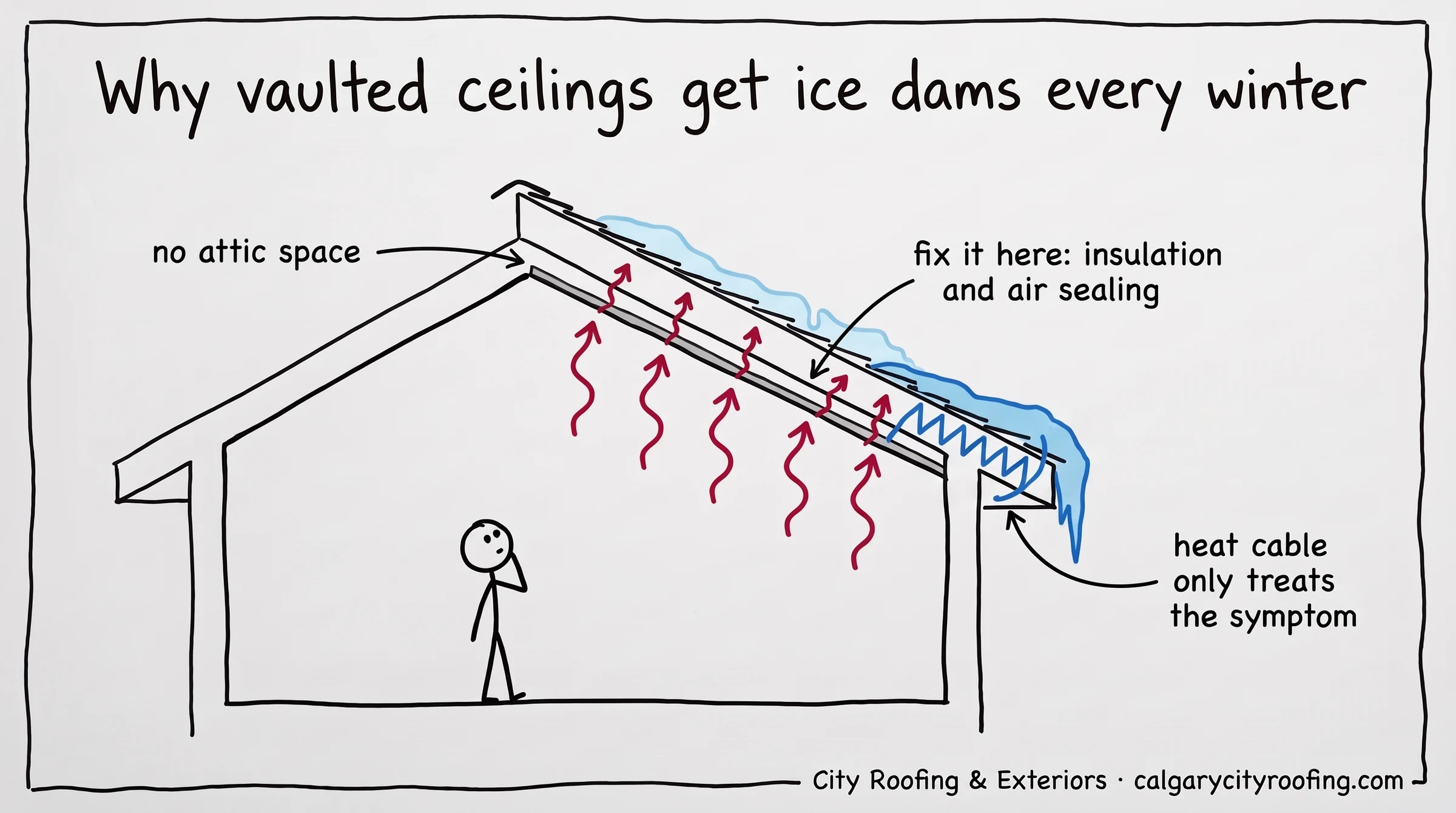
Vaulted and cathedral ceilings have no attic space for insulation and airflow, so house heat goes straight into the roof deck. In the Roofers In Calgary Facebook group, a local roofer with 25 years of re-roofing says these roofs often have rotted sheathing by the time anyone looks.
The fix is under the deck, not on top of it, such as more insulation and better air sealing in the vault, ideally planned at re-roof time. Heat cable on the eave treats the symptom, not the cause.
How do you stop ice dams from coming back?
Keep the roof deck cold. In order of what helps most:
- Seal the warm air leaks into the attic (hatch, fans, pot lights, stacks)
- Add attic insulation where it’s thin
- Make sure soffit and roof vents are clear so cold air moves through
- At re-roof time, run waterproof membrane well up from the eaves and in the valleys
- Use heat cable only as a stopgap on a spot that keeps failing
Air sealing and insulation also lower your heating bill, which heat cable won’t.
Does home insurance cover ice dam damage in Alberta?
Usually for sudden damage, not for repeat problems. The Insurance Bureau of Canada says sudden water damage from an ice dam is commonly covered, but ongoing damage is treated as a maintenance issue.
Call your insurer as soon as you find a leak, photograph everything, and fix the cause before next winter. A second claim for the same dam is much harder to get paid.
Common questions
Is it an ice dam or attic rain?
Attic rain is frost that builds on the underside of the roof during a cold snap, then melts all at once in a chinook and drips through the ceiling. It leaves the same stains as an ice dam but starts inside the attic. If there’s no ice at the eave, look in the attic first.
Do icicles mean my attic is poorly insulated?
Not always. A few small icicles can form on any roof. A heavy row along the whole eave usually points to heat escaping into the attic.
Who do I call for an ice dam leak, a roofer or an eavestrough company?
A roofer, if water is coming into the house. The leak is at the roof edge and the membrane under the shingles. An eavestrough company can help with troughs pulled loose by ice.
Do heat cables work?
They keep a channel open so meltwater can drain, which helps on a trouble spot. They don’t stop the heat loss that makes the dam, and they cost money to run all winter.
If an ice dam has already caused a leak, we fix roofs across Calgary, Airdrie, Cochrane, Chestermere and Okotoks. See our roof repair page, or call 403-608-9933.