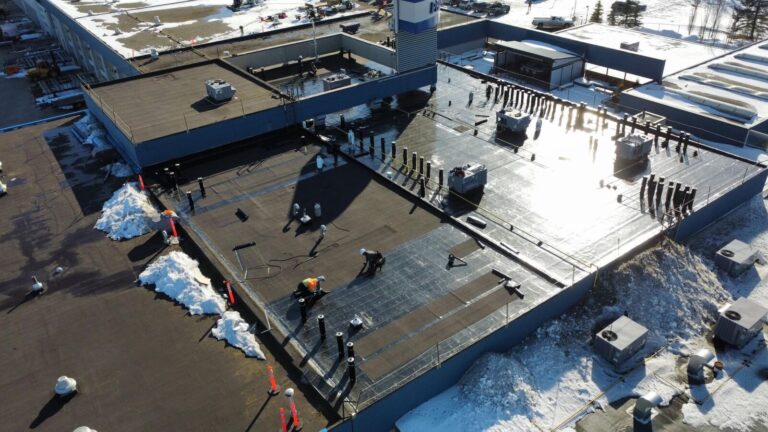
A flat roof needs a route for rain and snowmelt to leave the building. That route may use roof drains, scuppers or gutters. When water keeps collecting in the same area, the question is whether the outlet is blocked, the roof is not directing water toward it, or a detail needs repair.
How does a flat roof drain?
The roof surface has a fall toward an outlet. Interior drains take water into the building’s drainage pipework. Scuppers are openings through an edge or parapet. Some low-slope roofs drain over an edge into gutters. The right arrangement depends on the building and the roof design.
The Asphalt Roofing Manufacturers Association’s drainage guidance explains why slope and the position of outlets need to work together. A new membrane does not, by itself, correct the shape of the roof underneath it.
What does standing water tell you?
Water left in the same spot after the rest of the roof has dried is worth documenting. ARMA describes water that remains for 48 hours or longer as ponding. The depth, area, roof condition and weather all matter when someone assesses what to do about it.
Take photos from a safe place and record when the rain or thaw ended. Do not walk onto a wet or icy roof to measure a puddle. If there is water inside, describe where it appears and whether the leak changes as the weather changes.
For the repair process, see flat roof repair in Calgary. If the leak appears during a thaw, our winter flat roof leak guide covers the information to gather before a visit.
A blocked outlet and a low spot need different fixes
Debris at an outlet can interrupt a route that otherwise works. A persistent low area can keep collecting water even after the drain is cleared. There may also be damage at the membrane-to-drain connection, so clearing the blockage and stopping a leak are not necessarily the same job.
A repair recommendation should identify what was found. Ask for photos that distinguish the blocked outlet, the damaged detail and the area where water is collecting. That makes it easier to understand whether the quote covers maintenance, a local repair or a change to the drainage layout.
What about overflow drainage?
Some roofs have a separate overflow route. It needs to remain clear and should not be treated as a spare opening to seal. WoodWorks’ guidance on roof ponding explains why the relationship between drainage, water depth and roof structure matters. Changes to an outlet’s size, position or height need an appropriate design review.
Check drainage before replacing the membrane
If a replacement is being quoted, point out recurring puddles before agreeing to the scope. Ask whether the proposal addresses those locations and how drains, scuppers, equipment and walls will connect to the new roof. Where insulation is part of the work, ask how it relates to the proposed drainage.
Our flat roof installation and replacement service covers new systems on houses and buildings. For property managers and condo boards, commercial and flat roof inspections provide a starting point for deciding what needs attention.
Book a drainage or leak assessment
Call City Roofing & Exteriors at 403-608-9933 or send a quote request. Include the building address, when the water collects, whether it clears between storms and any photos you can take safely. We will inspect before recommending a repair or replacement.