Emergency Roof Repair Calgary: 100km/h Wind Damage Guide
Calgary wind warnings hit 100km/h. Learn why you need emergency roof repair Calgary wind damage experts to spot hidden leaks. Get a free estimate today.
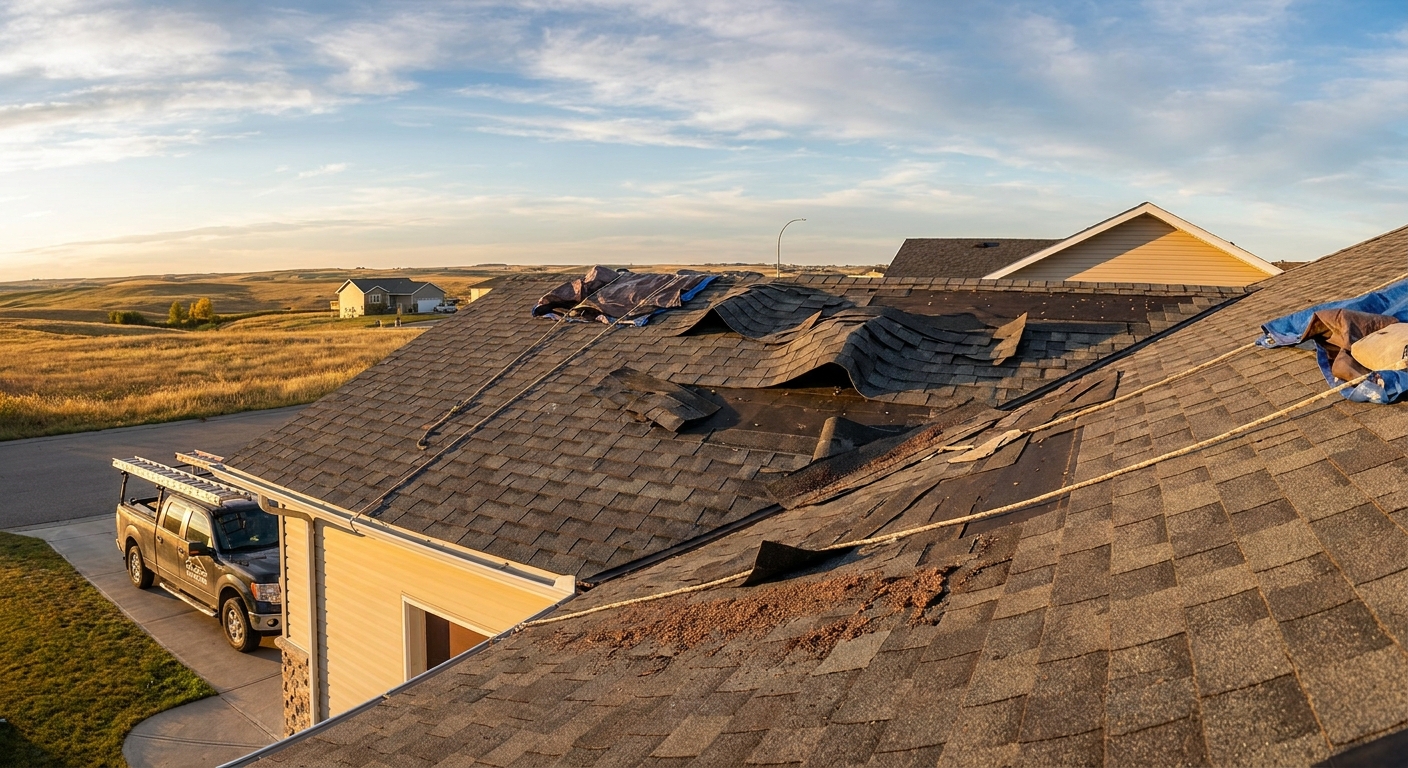
Quick Answer: The current 100km/h wind warnings in Calgary are strong enough to cause 'hidden' damage like shingle creasing and sealant failure, even if no shingles are missing. City Roofing recommends a professional inspection immediately following high-wind events to identify compromised seals before spring rains cause interior leaks. If you see shingles on your lawn, contact us for emergency tarping and an Xactimate-ready damage report.
Environment Canada Issues 100km/h Wind Warnings for Calgary
Environment Canada has issued severe wind warnings for Calgary and Southern Alberta as 100km/h gusts hit the region this week. This powerful low-pressure system is currently sweeping across the Prairies, and officials are warning of potential property damage, power outages, and dangerous driving conditions throughout the next 48 hours.
While most people are busy securing their patio furniture or checking for downed branches, these wind speeds represent the exact "breaking point" for the adhesive seals on your roof. You might think your home is safe because you don't see a pile of shingles in the yard, but the physics of a 100km/h gust can compromise a roof system in ways that aren't visible from the sidewalk.
Why 100km/h Gusts are the Tipping Point for Calgary Roofs
According to data from the National Research Council Canada, wind gusts exceeding 90km/h are officially classified as "damaging" to standard asphalt shingles. When winds hit that 100km/h mark, the upward pressure—known as wind-lift—can exceed the manufacturer's original adhesive rating. This is especially true for roofs that have lived through several Calgary winters.
Honestly, in 15 years of Calgary storm experience, we've seen how transition months like April create the perfect conditions for adhesive failure. Our unique Chinook cycles cause shingles to expand and contract rapidly between October and April. This makes the sealant strips brittle. By the time these late-April wind events arrive, the shingles don't have the flexibility they need to "ride out" the gust. Instead of bending, the sealant bond simply snaps.
If your roof wasn't installed using high-wind roofing standards, these gusts can easily get underneath the shingle tabs. Once the wind gets a foothold, it creates a vacuum effect that can peel back entire sections of your roof in seconds.
The Danger of Hidden Shingle Creasing and Wind-Lift
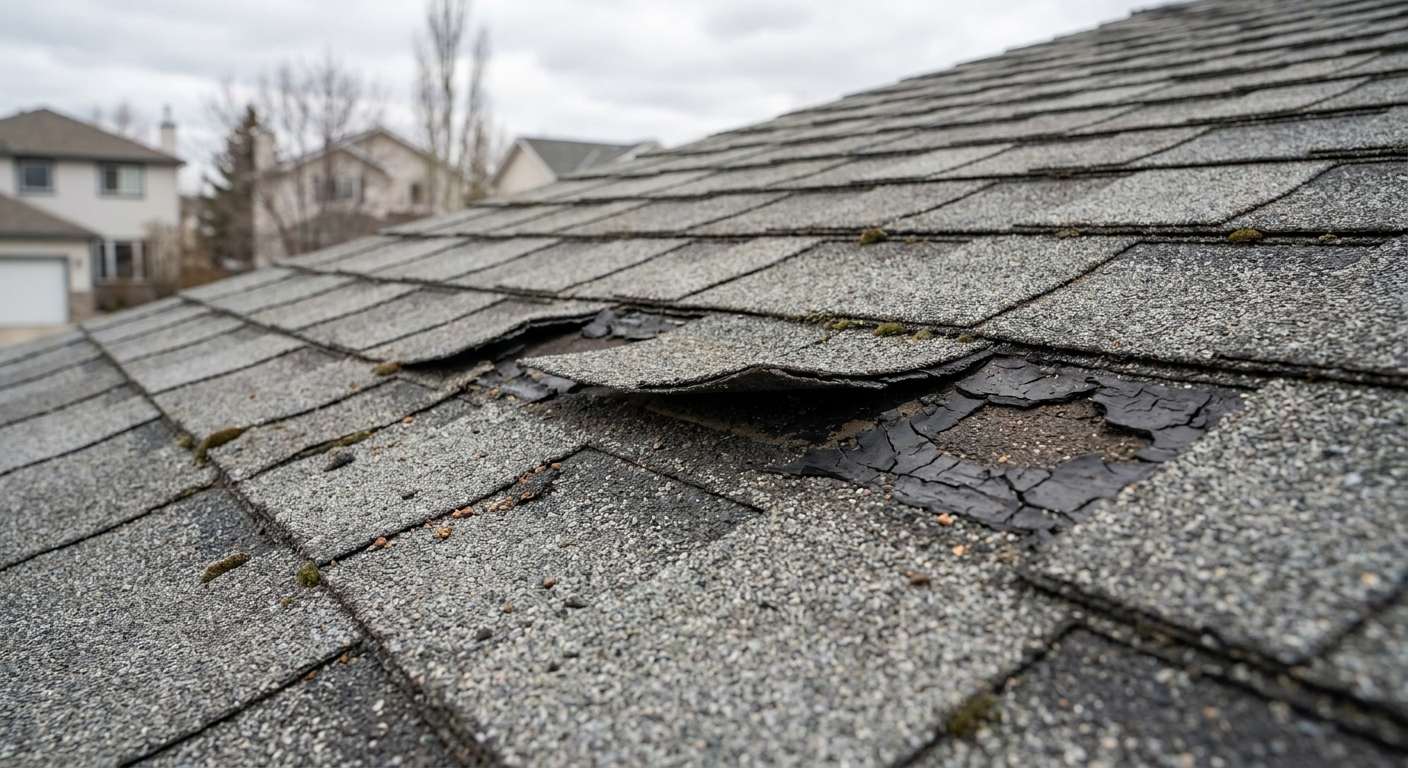
The most dangerous type of wind damage isn't the shingle that flies off—it's the one that stays put. We call this "creasing." When a high-velocity gust hits your roof, it can lift a shingle tab up to a 90-degree angle. This snaps the internal fiberglass matting. Once the wind dies down, the shingle lays back flat.
From the ground, the roof looks perfectly fine. But that shingle is now "dead." The waterproof seal is broken, and the internal structure is cracked. The next time it rains, water will blow right under that tab and into your attic.
| Damage Type | Visual Sign | Urgency Level | | :--- | :--- | :--- | | Missing Shingles | Exposed black underlayment or wood deck | Critical - Immediate Tarping | | Creased Shingles | Horizontal dark line across the shingle tab | High - Hidden Leak Risk | | Sealant Failure | Shingles lift easily with light finger pressure | High - Prone to next rain | | Fascia/Soffit Displacement | Hanging metal or gaps at the roof edge | Moderate - Animal Entry Risk |
One secondary indicator you can look for is "granule rain." If you notice an unusual amount of colored sand—the protective granules from your shingles—piling up at the bottom of your downspouts after a wind storm, it’s a sign of emergency roof repair Calgary wind damage. Those granules are shed when shingles flex and crease violently under wind pressure.
Identifying Damage in Older Calgary Neighborhoods
If you live in older established communities like Lake Bonavista or Silver Springs, your risk profile is significantly higher right now. Many homes in these areas are sporting roof systems that are 12 to 20 years old. At this age, the asphalt has lost its essential oils, making the shingles stiff and the adhesive almost non-existent.
Look—if your roof is over 12 years old, it likely lacks the modern adhesive strength to withstand 100km/h gusts. We often see catastrophic shingle loss in these neighborhoods because the "sealant life" has simply expired.
Our in-house crews are currently prioritized for emergency tarping in these high-risk areas to prevent secondary water damage. We also pay close attention to soffit and fascia displacement. In neighborhoods with mature trees, directional winds can funnel between houses, creating a "wind tunnel" effect that rips the metal fascia right off the wood sub-structure. This doesn't just look bad; it opens your home up to squirrels and birds looking for a spring nesting spot.
Navigating Roofing Insurance Claims in Alberta After a Storm
Managing an insurance claim after a major wind event can feel like a second job. The key is documentation. Most Alberta insurance policies require you to "mitigate further damage" immediately. This means if you have a hole in your roof, you can't wait three weeks for an adjuster to show up; you need to get it tarped now.
We use Xactimate to make sure your wind damage claim is documented with the exact line items insurance adjusters require for full roof replacement. This is the same software the big insurance companies use. By providing them with a professional damage assessment in their own "language," we often help homeowners get their claims approved faster.
It’s also critical to differentiate between "wear and tear" and "storm damage." An adjuster might try to argue that your shingles are just old. However, a creased shingle with a clear wind-lift pattern is definitive storm damage, regardless of the age of the roof. Having a professional on-site when the adjuster arrives can make a massive difference in your payout.
Immediate Steps for Emergency Roof Repair Calgary Wind Damage
If the wind is still howling, stay off the roof. No shingle is worth a trip to the Foothills Medical Centre. Once the weather calms down, follow these steps:
- Do a Perimeter Walk: Walk around your house and look for shingles on the grass or in the flower beds. Check your neighbors' yards too—sometimes your shingles end up three houses down.
- Check the "Lines": Look up at the roof slopes. Do you see any horizontal dark lines? Those are creases. Do you see any "ruffled" shingles that aren't sitting flat? That's sealant failure.
- Inspect the Gutters: Look for hanging metal or loose pieces of trim.
- Call for Tarping: If you see the black underlayment (the paper under the shingles) or the plywood deck, you need emergency roof repair immediately.
But here’s the reality: your roof’s adhesive doesn't care about the forecast; it cares about the physics of lift. Even if everything looks "okay" from your driveway, a 100km/h event is the right time to contact our Calgary team for a professional look.
Frequently Asked Questions
Q: What should I do if I find shingles on my lawn after a Calgary windstorm? A: Call for a professional inspection and emergency tarping immediately. Finding shingles on the ground means your roof's primary water barrier is gone. This leaves your home completely vulnerable to the spring rains that typically follow these high-wind events in Alberta.
Q: Can 100km/h winds damage my roof if it looks fine from the ground? A: Yes. High winds cause 'wind-lift' where shingles pull upward and break the sealant bond. The shingle often lays back down flat—appearing undamaged from the ground—while being completely unable to shed water or stay attached during the next minor gust.
Wrapping Up
A 100km/h wind warning isn't just a weather alert; it's a structural stress test for your home. Whether you have obvious missing shingles or suspect hidden creasing, getting a professional assessment now prevents a massive "surprise" leak during the next rainstorm.
Ready for a professional assessment? Contact our Calgary team or call 403-608-9933 — free estimates, in-house crews, no subcontractors.
Get a Free Estimate
City Roofing & Exteriors offers free, no-obligation estimates for all roofing and siding projects in Calgary.