Is Your Calgary Roof Leak an Emergency After the Storm?
Following Environment Canada's storm watches, learn how to identify emergency roof damage in Calgary and why 'mitigating loss' is critical for your insurance claim.
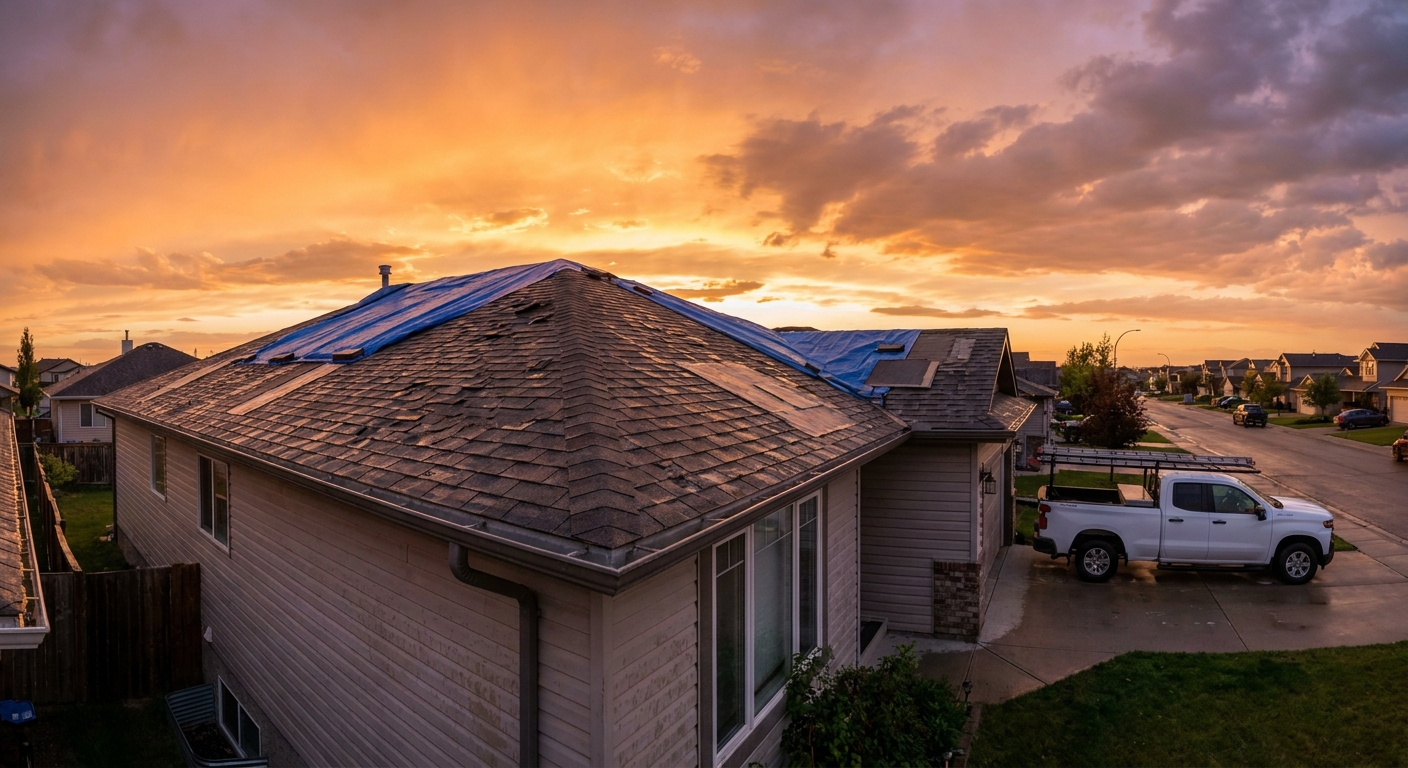
Quick Answer: Following the May 2026 severe thunderstorm watches from Environment Canada, a roof leak is considered an emergency in Calgary if water is actively entering the living space or threatening structural integrity. Because Alberta insurance policies typically require homeowners to "mitigate loss," immediate professional tarping is recommended to prevent secondary damage. City Roofing provides 24/7 emergency response to secure your home before the next storm cell hits.
Key Takeaways
- Active water ingress near electrical systems or causing ceiling "bubbles" requires immediate emergency roof repair Calgary hail intervention.
- Alberta homeowners have a contractual obligation to "mitigate loss," meaning you shouldn't wait for an adjuster to stop an active leak.
- Functional damage from Calgary hail can breach the shingle layer instantly, unlike standard wear-and-tear leaks.
- Professional documentation using industry-standard software like Xactimate is critical for supporting your subsequent insurance claim.
Environment Canada Issues 2026 Severe Thunderstorm Watch: What It Means for Your Roof
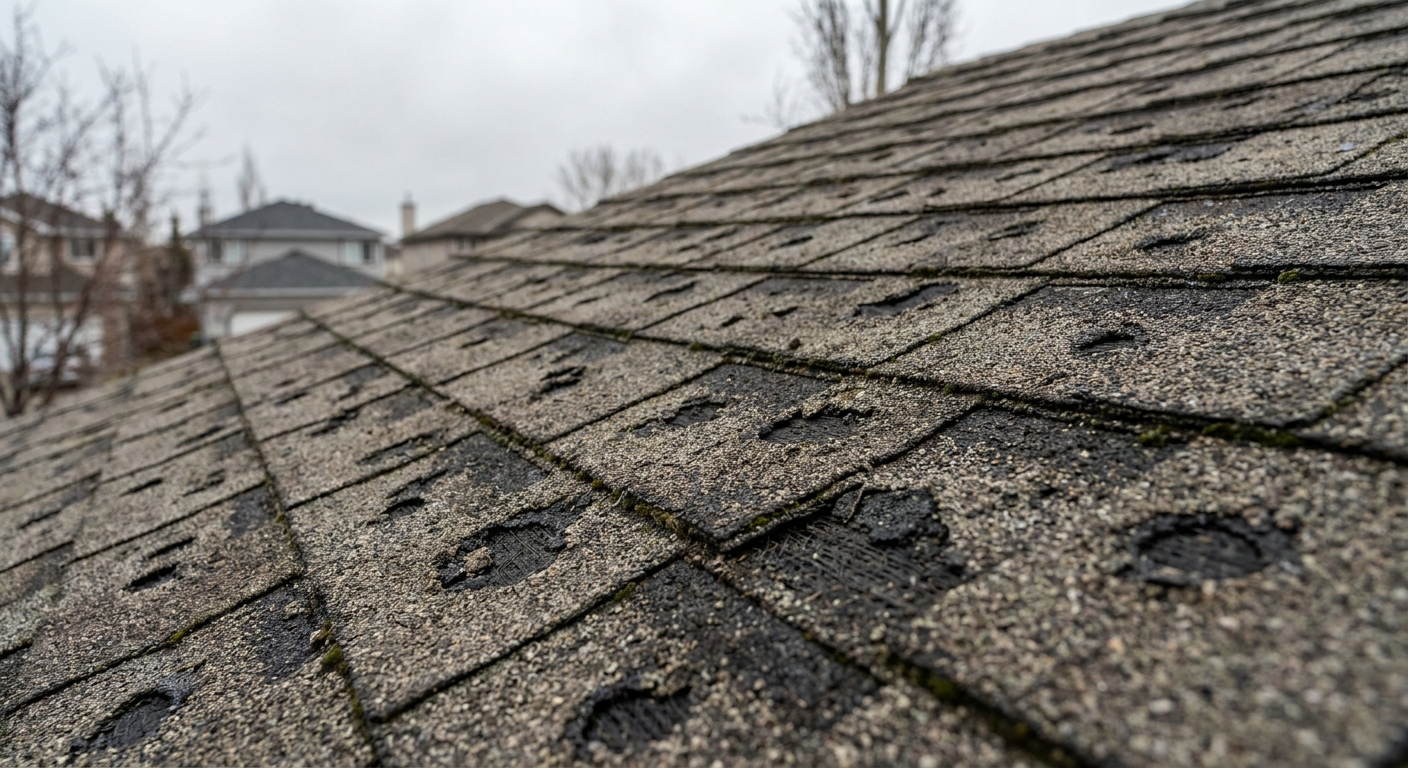
On May 27, 2026, CBC News reported that Environment Canada issued severe thunderstorm watches for Southern Alberta, specifically highlighting risks of large hail and damaging winds. For Calgary homeowners, this isn't just a weather update—it's the official start of a high-risk season. When these storm cells hit the "Hail Alley" corridor, they don't just cause cosmetic dents; they create functional breaches.
A functional breach happens when hail impact is violent enough to crack the fiberglass mat of your shingles or dislodge enough granules to expose the underlying bitumen. Unlike a slow leak caused by age, a storm-induced leak is often sudden and high-volume. If you see water spots appearing on your ceiling during or immediately after a heavy downpour, the protective layer of your home has been compromised. You need to act before the next weather system moves through.
How to Tell if Your Calgary Roof Leak is a True Emergency
Not every drip requires a 2:00 AM phone call, but some signs indicate your home's safety is at risk. From our 15+ years of experience identifying hail-induced structural breaches in Calgary, we've seen that water doesn't just damage drywall—it seeks out electrical paths and structural supports.
If water is dripping from a light fixture or pooling near your electrical panel, you have a critical emergency. You should turn off the power to that zone and call a professional immediately. Similarly, if you notice a "bubble" in your ceiling paint, that is a sign of significant water accumulation. Poking a small hole in that bubble to drain the water into a bucket can prevent the entire ceiling from collapsing, but the roof above still needs an immediate emergency repair assessment.
| Damage Sign | Urgency Level | Recommended Action | | :--- | :--- | :--- | | Ceiling sagging or "bubbling" | Emergency | Immediate tarping & bucket placement | | Water dripping near electrical | Critical Emergency | Turn off power & call professional immediately | | Granules in gutters (no active leak) | Non-Emergency | Schedule inspection within 7 days | | Missing shingles (no active leak) | High Priority | Tarping recommended before next rain |
The "Mitigation of Loss" Rule: Why You Can't Wait for an Adjuster
A common mistake we see in Calgary is homeowners waiting for an insurance adjuster to visit before they fix a leak. While it seems logical to wait for "permission" to repair, your insurance policy likely contains a "mitigation of loss" clause. According to the Insurance Bureau of Canada (IBC), homeowners are responsible for taking "reasonable steps" to prevent further damage after a storm.
If you let a roof leak continue for three days while waiting for an adjuster, and that leak leads to a mold outbreak or rotted trusses, your insurer might argue that the secondary damage was preventable. Professional emergency tarping fulfills your obligation to protect the property. At City Roofing, we use in-house crews to make sure we can respond rapidly to these mitigation needs, providing the temporary security required to keep your interior dry while the long-term claim is processed.
Policy terms vary by insurer. City Roofing can document roof condition and provide an Xactimate-format estimate, but homeowners should confirm coverage details with their insurer or broker.
Documenting Storm Damage for Alberta Insurers
Alberta is the costliest province for severe weather in Canada. The IBC noted that multi-billion dollar annual losses are frequently driven by Alberta hail. Because of these high costs, insurers in Calgary are often very specific about the documentation they require.
When we arrive for an emergency call, we don't just throw a tarp on the roof. We document the initial breach with high-resolution, date-stamped photos. We also use Xactimate, the same estimating software used by most major insurance adjusters. This makes sure our documentation speaks the same language as your insurer, which can help speed up the approval process. Having clear evidence of the "before and after" of the emergency repair is essential for a smooth claim.
Expert Comment
From the roofs we see across Northwest and Northeast Calgary, there is a massive difference between "cosmetic" hail dents and "functional" breaches. Many homeowners ignore small dents on their vents or gutters, thinking the roof is fine. But in the "Hail Alley" corridor, we often find that while the shingles look okay from the ground, the impact has actually fractured the seal underneath. If a storm hits and you see any water ingress at all, it demands a 24-hour response. We've seen minor leaks turn into full-scale attic mold issues in just a few weeks because the homeowner thought they could wait until the end of the season to call a roofer.
Homeowner Checklist: Post-Storm Actions
- Check the attic and highest ceiling for dark spots or sagging immediately after the storm passes.
- Document any active leaks with date-stamped video and photos.
- Place buckets under active drips to protect flooring and furniture.
- Call a professional roofer for emergency tarping if the roof is breached; do not attempt to climb a wet, damaged roof yourself.
- Contact your insurance broker to start the claim process, noting that you have already taken steps to mitigate further damage.
- Keep all receipts and documentation from the emergency repair crew for your adjuster.
Frequently Asked Questions
Q: Does insurance cover emergency roof tarping in Calgary? A: Most Alberta policies cover reasonable costs for temporary repairs to prevent further damage under the "mitigation of loss" clause. Homeowners should confirm specific coverage limits with their broker, but documentation of the emergency is essential. Source: Insurance Bureau of Canada.
Q: How long can I wait to fix a roof leak after a hail storm? A: In Calgary's volatile climate, you should address a leak within 24 hours. Delaying can lead to structural rot or mold, which insurers may categorize as "preventable damage" and refuse to cover.
Q: Can I just put a tarp on the roof myself? A: We don't recommend it. Climbing a roof after a storm is dangerous due to wet surfaces and potential structural instability. Furthermore, professional tarping is more likely to be accepted by insurers as a valid mitigation step.
Sources
- CBC News — "Severe thunderstorm watches issued for parts of southern Alberta as storm season kicks off" (2026-05-27) — Supports the timing and severity of the May 2026 weather event.
- Insurance Bureau of Canada (IBC) — "Alberta severe weather 2025 costs" (2026-01-15) — Supports the fact that Alberta is the costliest province for weather damage.
- Insurance Bureau of Canada — "Claiming after a storm" — Supports the homeowner's responsibility to take reasonable steps to mitigate loss.
Ready for a professional assessment? Contact our Calgary team or call 403-608-9933 — free estimates, in-house crews, no subcontractors.
Get a Free Estimate
City Roofing & Exteriors offers free, no-obligation estimates for all roofing and siding projects in Calgary.