
Hail Damage Roof Repair Calgary
Insurance claims, clear scope, clean crew.
Hail damage roof repair Calgary homeowners can trust starts with someone getting on the roof and writing down what they find. City Roofing & Exteriors repairs and replaces hail-damaged roofs, siding and soft metal, and has documented more than 1,200 hail claims since 2014. You get photos, a written scope and a quote you can compare. Your insurance claim stays between you and your insurer.
What Calgary homeowners say about us
Our reviews do the explaining. These are word for word from public Google reviews.


That is 4.8 stars across 186 Google reviews. Read all of them on Google before you call anyone, including us.
Signs your roof has hail damage
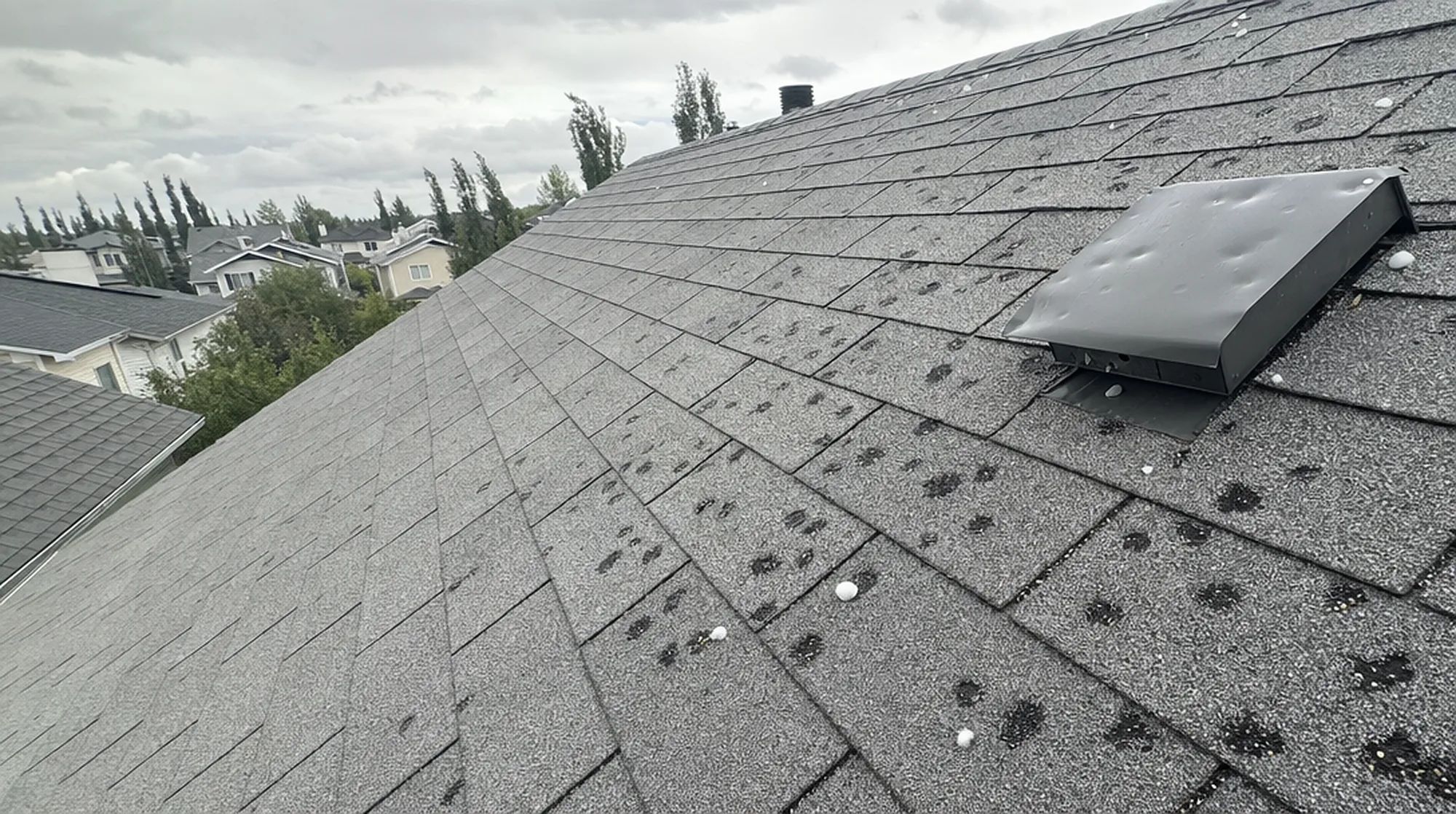
Hail does not always leave a hole. Often it leaves a bruise, and the leak shows up months later. Look for these.
- Granules collecting in the eavestroughs or at the base of the downspouts.
- Dark, dented or bruised spots on shingles that were not there before.
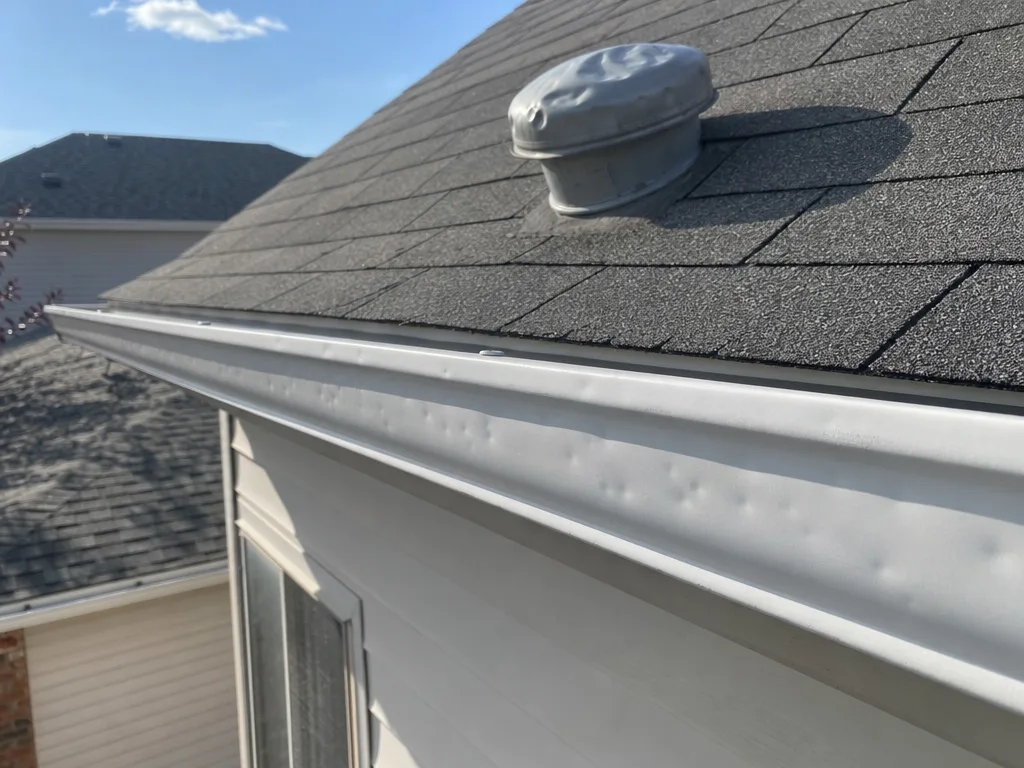
- Dents in vents, flashing, eavestroughs or fascia. Soft metal shows hail first.
- Cracked or chipped siding and damaged window trim on the side the storm came from.
- A new ceiling stain or drip after the storm, even weeks later.
- Neighbours on your street with roofers out front.
You often cannot see hail damage from the ground. The shingle mat is bruised, not holed. Get someone onto the roof, and ask for photos of what they find.
One reviewer wrote that we “completed all the repairs caused by the hail storm occurred in 2024 summer in a timely manner and with quality.” Reviewers on our Google listing write about the big summer 2021 storm and the August 2024 storm. One described the hail that year as “golf ball-sized”. Homeowners in Rocky Ridge and Panamount are among the Calgary reviewers.

What hail does to roofs, siding and eavestroughs
A hailstorm hits several surfaces at once. The roof gets the attention, but it is rarely the only thing damaged.
-
Shingles
Impact bruises the shingle and knocks off the granules that protect it. The roof still looks fine from the driveway.
-
Eavestroughs, fascia and downspouts
Soft metal dents on impact, and the dents are easy to photograph.
-
Siding and window trim
Wind-driven hail hits the walls on the storm side and cracks vinyl and chips trim.
-
Vents, flashing and roof penetrations
Small metal parts take the full impact.
-
Decking and attic
Water can get in through bruised spots later. Calgary’s freeze-thaw swings turn small bruises into leaks over a winter.
If siding was hit too, we repair it on the same job. See our siding contractor page.
How a roof insurance claim works
Every insurer and policy is different, so check yours. Most claims follow the same steps.
-
Look at the damage.
Photograph the roof, eavestroughs, soft metal and siding as soon as it is safe.
-
Report it.
You contact your insurer and open the claim. Check your policy for deadlines.
-
The adjuster inspects.
The insurer sends someone to look at the roof and write up what they find.
-
You get the settlement decision.
It covers what the insurer accepts, less your deductible.
-
The repair is done.
You choose the contractor and approve the scope.
Why claims miss damage
Mark Dawson says almost every insurance claim he sees is missing items. Hail leaves bruises more often than holes, and the damage is often on slopes you cannot see from the ground.
Two reviewers wrote about what was found. One wrote that we “discovered and fixed hail damage that had been overlooked by the insurance inspector.” Another wrote that we “identified a hidden leak in my garage roof that the insurance inspector had missed.”
Damage tends to hide in soft metal, on slopes that face away from the street, on siding and trim on the storm side, on garages and sheds, and in the attic, where water shows up weeks later. A second look costs you a visit. It can save you a leak next spring.
Hail damage roof repair or full roof replacement
Two roofs on one street can need different work. These are the choices, from smallest to largest.
Spot repair
Suits a few clearly limited hits on an otherwise sound roof.
Section repair
Suits damage on one or two slopes.
Full replacement
Suits widespread damage, or an older roof that was already worn.
Siding and soft metal
Eavestroughs, fascia, vents and siding are repaired or replaced along with the roof.
What decides it:
- How many slopes were hit.
- The age and condition of the shingles.
- What the attic shows.
- Whether matching shingles are available for a repair.
Ask any roofer you invite out for photos and a written description of the damage. Ask for the scope in writing before you sign, and ask what is not included.
If the roof needs replacing, a typical shingle roof on a two-storey Calgary home runs
$5,000 to $15,000
Siding, eavestroughs and other extras are priced on top. We install IKO and Malarkey shingles, and most house roofs are finished in a day.
See roof replacement for the full breakdown, and roof repair for smaller jobs.
What we do alongside your claim
We work alongside your claim. We do not file it for you, and we do not decide the outcome.
- We inspect the roof, soft metal and siding and photograph what we find.
- You get a plain-words written description of the damage.
- You get an itemized, written quote for the repair or replacement.
- The same crew repairs the roof, soft metal and siding, on one schedule.
- We do not promise to approve, speed up or increase a claim.
One reviewer described the 2021 storm this way: “After the big hail storm in the summer of 2021 City Roofing came and met with us at the house. We went over the insurance details and came up with a plan to get the repairs done.” Another wrote: “I know dealing with the insurance company during this process wasn’t easy, but thanks to your help, everything went smoothly from start to finish.”
What to expect from a hail damage repair
-
Request a roof check
Call 403-608-9933 or send the form. The office replies and books a visit.
-
Site visit
Someone looks at the roof, soft metal and siding.
-
Photos and a written description
You see what was found, in writing.
-
Written quote
The scope is itemized so you can compare it with other bids.
-
You approve, we schedule
Work starts as weather allows. We tell you as soon as a date moves.
-
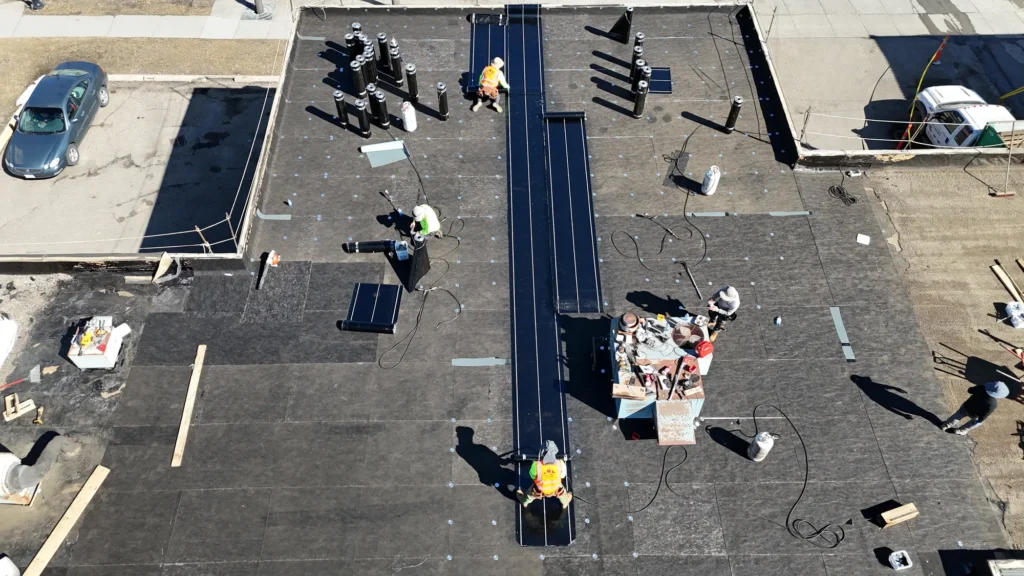
Crew on site
We send enough people to finish in a day where the job allows, so there is no second round of setup and travel.
-
Cleanup and walk-through
Nails swept, site tidy, final look with you.
Before you hire a roofer after a storm
Storms bring a lot of calls and a lot of pressure. A few habits protect you.
- Take your own photos first, with the date on them.
- Read your policy for the deductible and any reporting deadline.
- Compare two or three written scopes, not just the totals.
- Ask who your contact is and how updates will reach you.
- Do not sign until the scope is in writing.
One reviewer wrote that they were “happy to have chosen this company to repair our house from hail damage”, and that “they cleaned up well after the repairs and was responsive to our questions and concerns.” Another wrote that we “kept us well informed, did excellent work at competitive prices”.
Warranty
Siding and soft metal repairs carry a five-year workmanship warranty. Full shingle replacements carry a limited lifetime workmanship warranty. Ask for the terms in writing with your quote.
What Calgary homeowners say about their hail repairs
At last count, 25 of the text reviews on our Google listing mention hail. The listing is 4.8 stars across 186 reviews.
You will deal with the same people from the first visit to the last. Jacky, our service manager, and Ashley, our residential operations manager, are named in these reviews again and again. Brandy runs the office.
See recent work on the projects page.
Service area
Our office is at 3935 3A St NE, Unit 3, Calgary, AB T2E 6S7. We repair hail damage across Calgary, and in Airdrie, Cochrane, Chestermere and Okotoks. Office hours are Monday to Saturday, 8am to 7pm.
- Calgary
- Airdrie
- Cochrane
- Chestermere
- Okotoks
Questions about hail damage and insurance claims
How do I choose a roofer for hail damage?
Ask for photos and a written description of the damage. Ask for a written quote with the scope spelled out. Compare how quickly and clearly each roofer replies, not only the number. Read the full text of their Google reviews, including what reviewers say about cleanup. See our roofing contractor page.
How much does hail damage roof repair cost?
It depends on roof size and pitch, how much of the roof was hit, the materials and how much siding and soft metal is damaged. A small repair costs far less than a full replacement. A typical shingle roof replacement on a two-storey home runs $5,000 to $15,000. A site visit gives you a real number.
How do I know if my roof has hail damage?
Check the eavestroughs and downspouts for dents and granules. Look for dented vents, flashing and trim. Bruises on shingles are hard to see from the ground, so get a roof-level look and ask for photos. See how hail damages metal compared with shingles.
Should I repair or replace the roof after a hailstorm?
It depends on how widespread the damage is and how old the roof was. Isolated bruises on a sound roof can be a repair. Damage on several slopes or on an older roof often points to replacement. See roof replacement. See what a Calgary roof replacement costs.
Can hail damage show up months after the storm?
Yes. Freeze-thaw swings can open a small bruise into a leak. Check the attic and ceilings after the first thaw, and photograph any damage as soon as you spot it.
Should I call a roofer before I file a claim?
You can. A roofer’s photos and written description show you what you are claiming for, and give you something to compare with the adjuster’s report. Check your own policy for reporting deadlines.
What if the adjuster missed damage?
It happens. Mark Dawson says almost every claim he sees is missing items. Ask a contractor to inspect the roof, soft metal and siding and give you photos and a written description.
Who deals with my insurance company?
You do. The claim is between you and your insurer. A written scope and photos are the usual starting material, and we provide both. We do not promise to approve, speed up or increase a claim.
Need hail damage roof repair in Calgary?
Tell us what you noticed after the storm. We will call to book a visit, look at the roof, soft metal and siding, and send a written quote. If water is coming in now, call 403-608-9933 instead. For hail damage roof repair Calgary homeowners can count on, with a clear view of your insurance claim, request a roof check today. We serve Calgary, Airdrie, Cochrane, Chestermere and Okotoks.