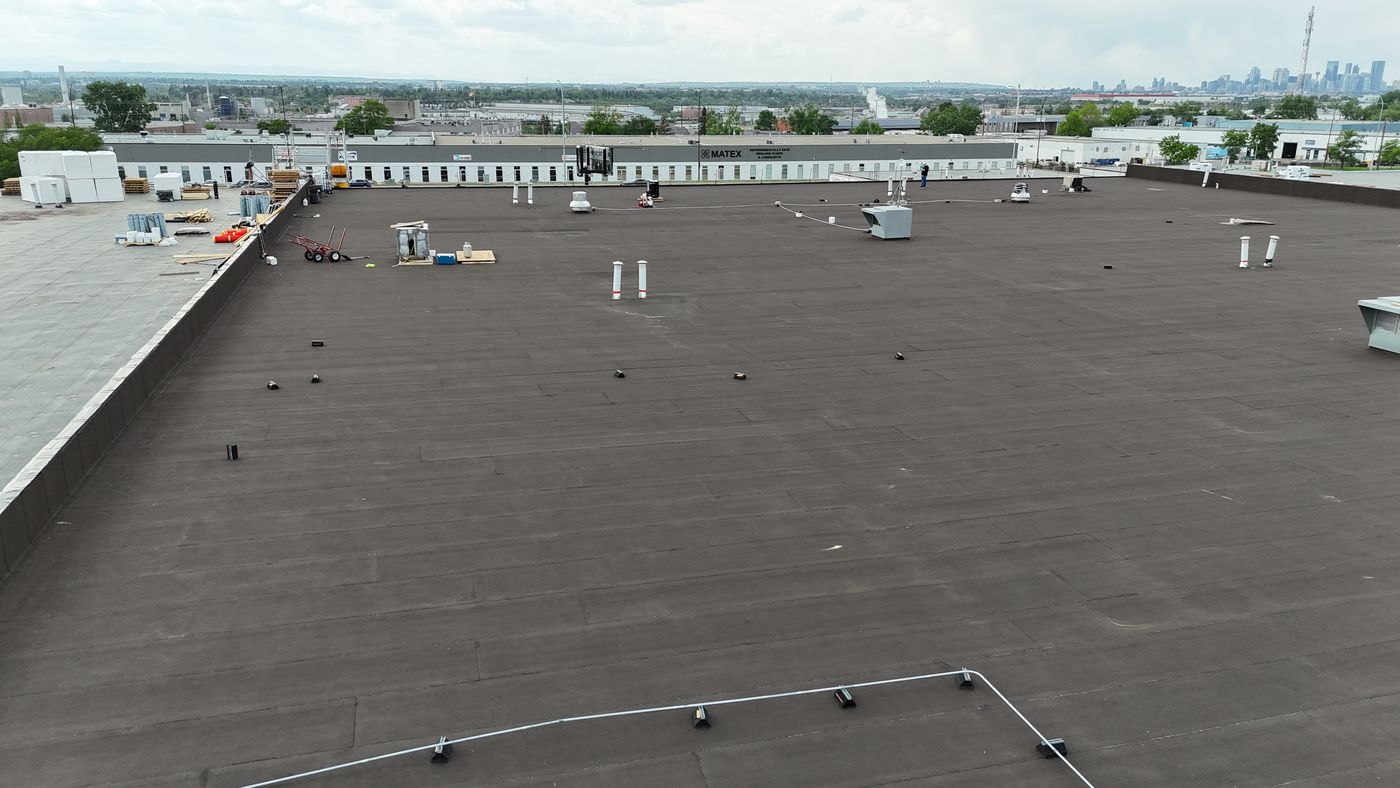
Commercial Roofing and Roof Repair Calgary
Flat roofs for Calgary buildings.
Commercial roof repair and replacement for business, condo and multi-family buildings. Repairs from $350. Replacements usually $10 to $20 a square foot, with a 10-year workmanship warranty.
What building owners say about us
Our reviews do the explaining. These are word for word from public Google reviews.


That is 4.8 stars across 186 Google reviews. Read all of them on Google before you call anyone, including us.
- Commercial, condo and multi-family buildings
- Torch-on (SBS), TPO and EPDM
- Inspections, reports and maintenance plans
- 10-year workmanship warranty
Repair it, replace it, or keep an eye on it
Property managers usually call us for one of two reasons: a leak, or a roof they are worried about. Here is what each kind of job involves and what it usually costs.
Commercial roof repair
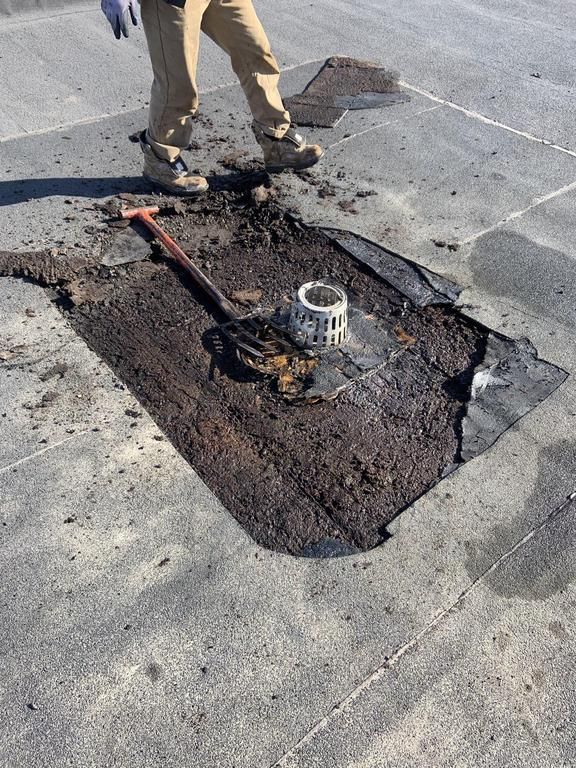
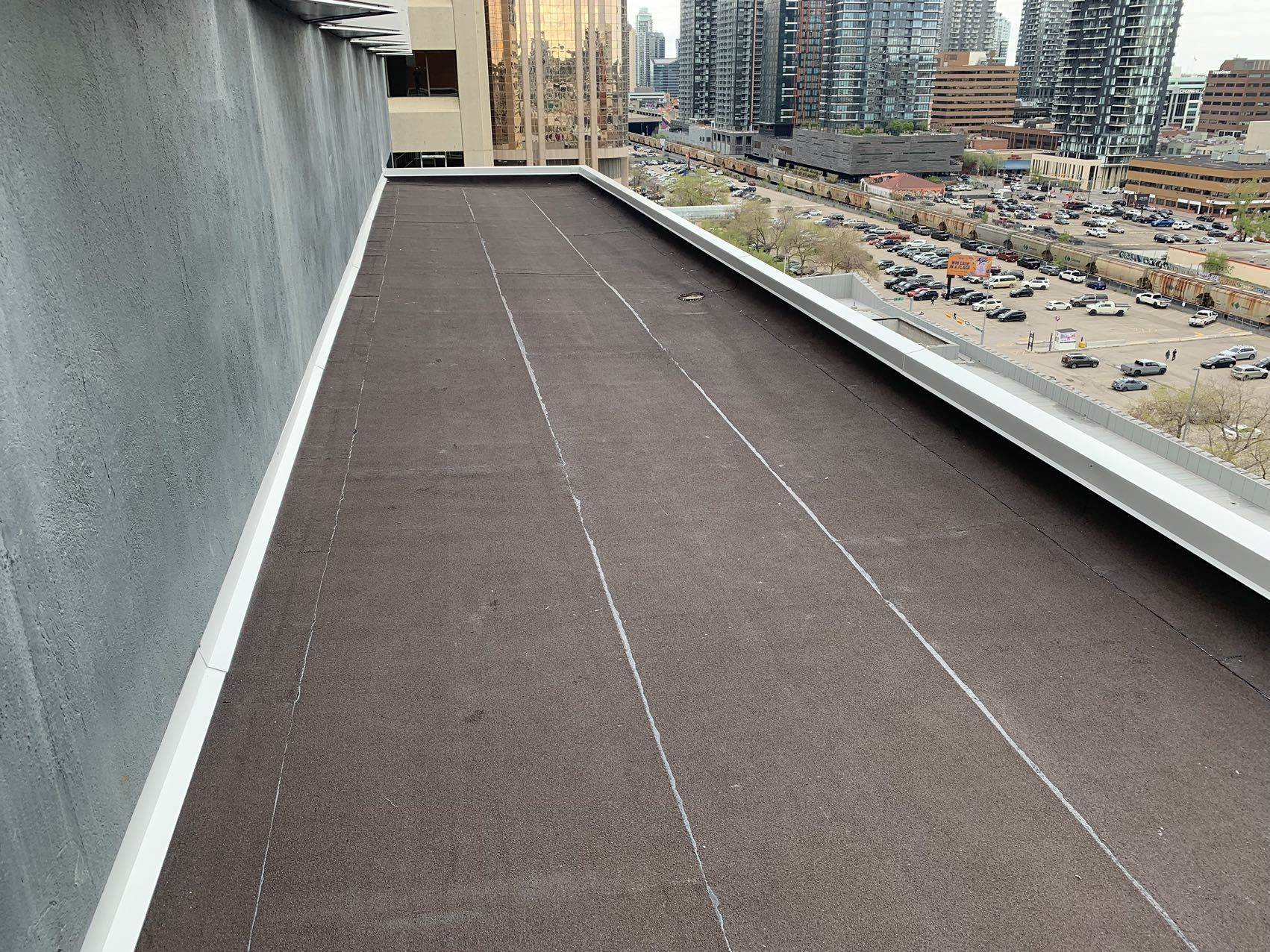
Most flat roof repairs we do run $350 to $2,500. We check the membrane for blisters, cracks, open laps, worn sealant, ponding and impact damage, find where the water gets in, fix it, and tell you plainly whether the rest of the roof needs more. If the membrane is in decent shape, you get a repair, not a new roof.
Replacement and new flat roofs
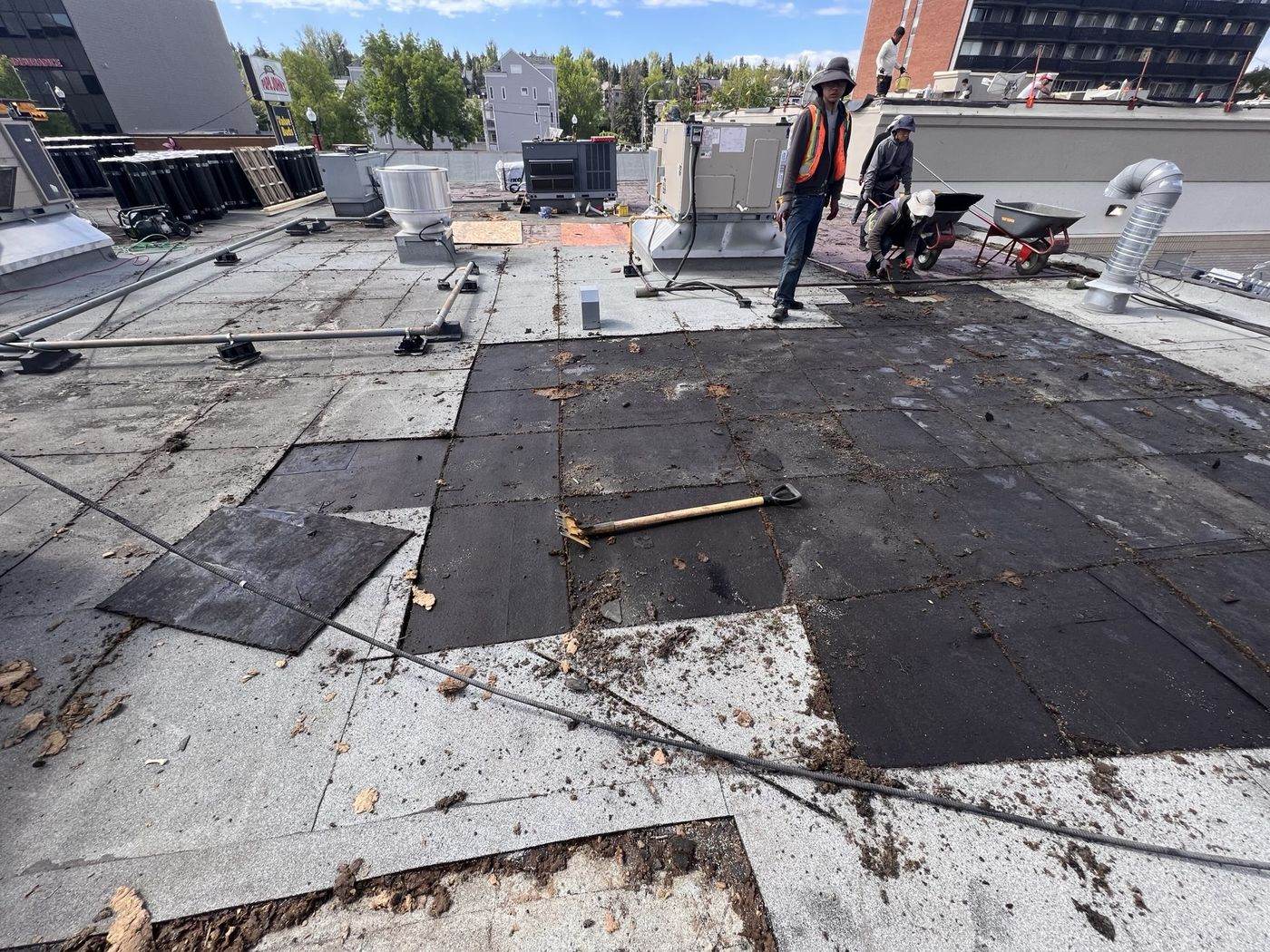
When the membrane is failing in many places, a new roof is usually cheaper than chasing leaks. Replacements usually come in at $10 to $20 a square foot. We tear off the old roof, repair rotted deck underneath, and install the new system with a 10-year workmanship warranty.
Inspections and maintenance plans
Not leaking yet, but you are not sure about it? We walk the roof, check the membrane, laps, sealant and drainage, and write up what we find. Ask about a maintenance plan if you would rather we kept checking it for you.
How a commercial roofing job works
-
Request a quote
Call 403-608-9933 or send the form. Tell us about the building, the roof and what you have noticed.
-
Roof inspection
We walk the roof and check for blisters, ridges or cracks in the membrane, worn granules, curling edges, ponding, hail or impact damage, open laps and dried sealant. A few in one area usually means a repair. Most of them across the roof usually means a new one.
-
Itemized quote
You get the scope and price line by line, so you can compare it with other bids on the same work.
-
Schedule
Materials are ordered and you get a start date. Weather can move it, and we tell you as soon as we know.
-
The work
A repair fixes the failed area. A replacement covers tear-off, deck repairs where needed, insulation and a new roofing system.
-
Cleanup and warranty
The roof and site are cleaned up. Flat and commercial roofs carry a 10-year workmanship warranty. Ask for the terms in writing with your quote.
Why we put torch-on on most Calgary flat roofs
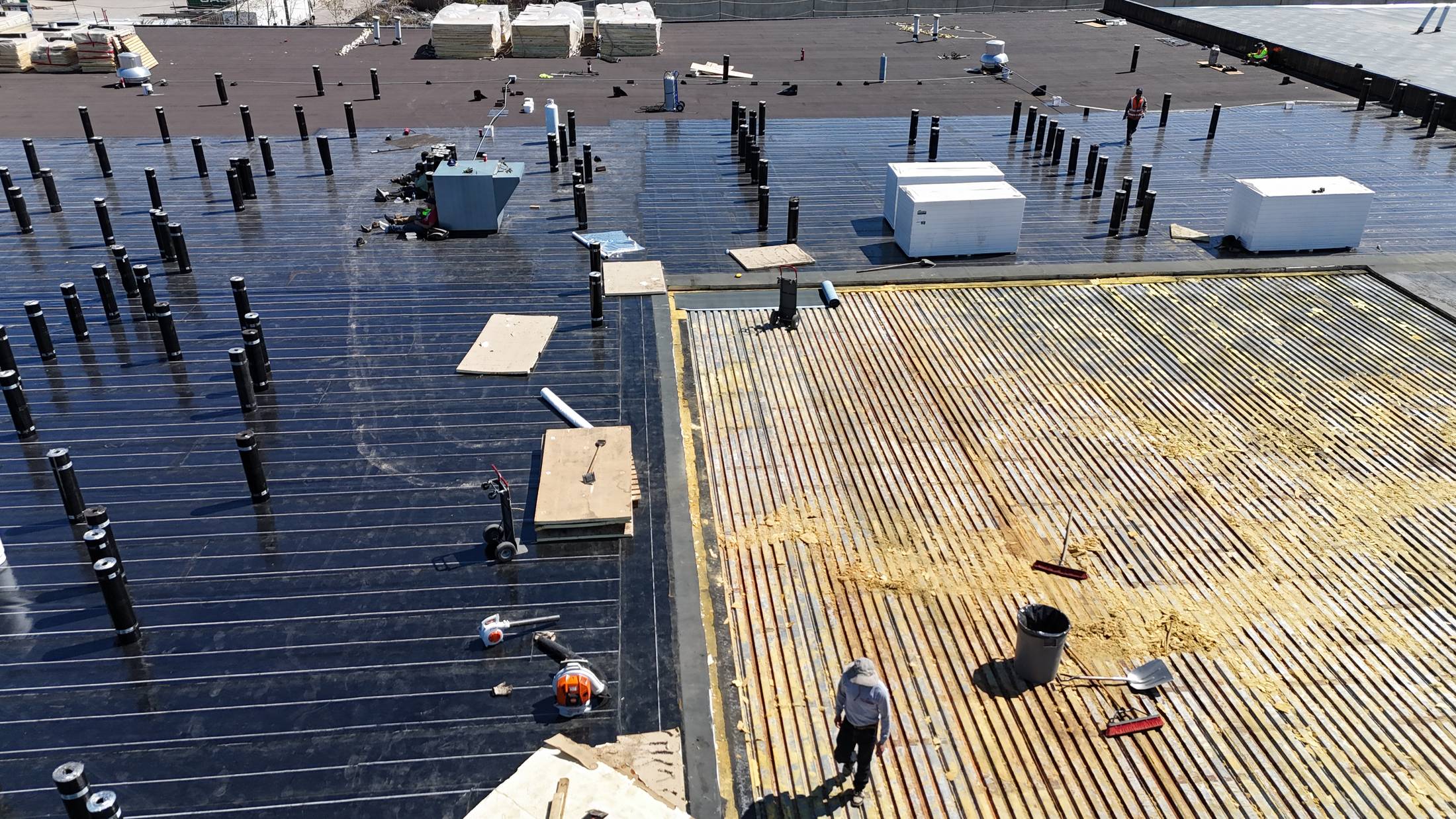
We install torch-on (SBS modified bitumen), TPO and EPDM, and we use TPO or EPDM where they fit a building better. Ask us which system we would pick, though, and the answer is torch-on. It is the best flat roof system for most of the buildings we work on, so it is what we install most. Our flat roof membranes are IKO.
Torch-on, TPO or EPDM: ask any roofer which one they would pick for your building, and why. You should get a straight answer.
Three recent commercial roofs and what they cost
$3,500,000 Ice River Springs
$175,000 Northwest Tank Lines
$115,000 Pit Stop Portables
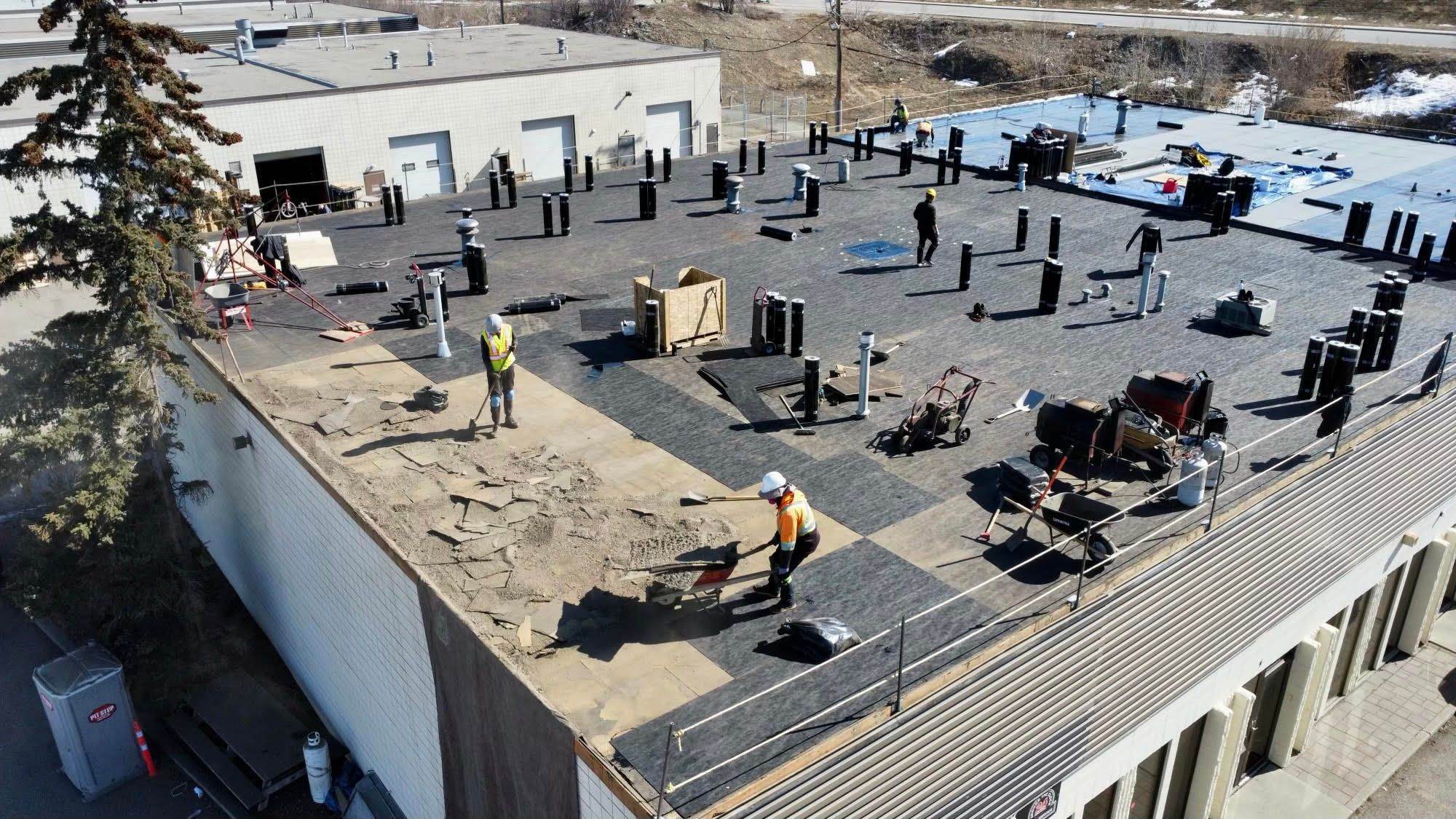
Replacements are priced by the square foot, usually $10 to $20, so the size of the building drives most of the difference. We take on 200 to 300 jobs a year across Calgary, and have since 2011.
Commercial roofing across Calgary and nearby towns
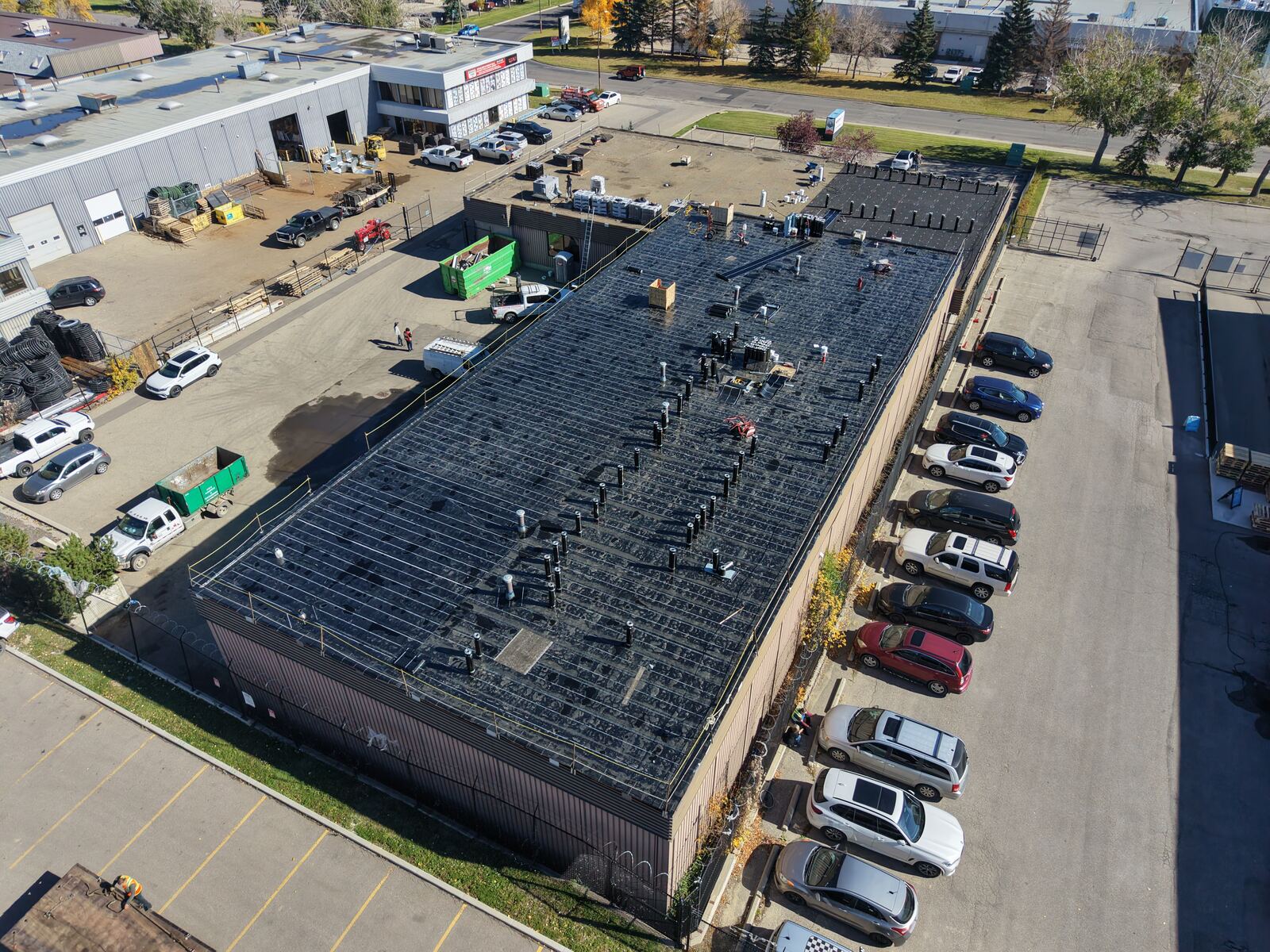
We work on commercial, condo and multi-family buildings in every quadrant of Calgary, plus Airdrie, Cochrane, Chestermere and Okotoks. Trevor, our Commercial Operations Manager, runs our commercial jobs. The office is at 3935 3A St NE Unit 3, open Monday to Saturday, 8 to 7, and we speak English, Cantonese and Mandarin.
- Calgary
- Airdrie
- Cochrane
- Chestermere
- Okotoks
Commercial roofing questions
How much does a commercial flat roof cost in Calgary?
Replacements usually run $10 to $20 a square foot, so a 10,000 square foot roof is roughly $100,000 to $200,000. Repairs usually run $350 to $2,500. Our last three commercial roofs came in at $115,000, $175,000 and $3.5 million. You get an itemised written quote after we have seen the roof.
Our commercial roof is leaking. What should we do first?
Move stock and equipment away from the drip, put a container under it and take photos of the ceiling. Keep everyone off a wet or icy roof. Then call 403-608-9933, Monday to Saturday, 8 to 7. Water often travels before it drips, so we find where it actually gets in and tell you whether it is a repair or a bigger job.
Should I repair or replace my flat roof?
If the membrane is in decent condition, repair it. We look for blisters, ridges and cracks, granule loss, curling, ponding water, impact damage, open laps and worn sealant. A few of those in one area is a repair. Most of them across the roof and a new roof is usually cheaper than chasing leaks.
Which flat roof system is best for Calgary?
We install torch-on (SBS), TPO and EPDM. Torch-on is our pick for most Calgary buildings and the one we install most. Our flat roof membranes are IKO. See how torch-on, TPO and EPDM compare in Calgary.
What warranty do you give on a commercial roof?
A 10-year workmanship warranty on flat and commercial roofs. See what a roof warranty covers and what voids it.
Do you work on condo and multi-family buildings?
Yes. We repair and replace flat roofs on condo and multi-family buildings, including an eight-plex flat roof you can read about in our Google reviews. Tell us how many units and who signs off, and we will work with the board or property manager.
Who will I deal with?
Trevor, our Commercial Operations Manager, runs commercial jobs. Call 403-608-9933, Monday to Saturday, 8 to 7.
Leaking, or just worried about it?
Call 403-608-9933, Monday to Saturday, 8 to 7, or request a quote online. Tell us the building, roughly how big the roof is and what you have noticed.